
Authoritative Architecture Sources for Architects, Engineers & Specifiers
Reliable architectural research requires more than project imagery and design commentary. Architects, engineers, consultants, specifiers and facility teams need sources that support building-code coordination, accessibility, sustainability, resilience, urban design, conservation, professional practice and technical specification. This resource library brings together international institutions, professional organizations, government guidance and established architecture publications that can support stronger research and more defensible project decision-making.
How to Use an Architectural Authority Source
Source authority depends on the question being researched. Government agencies and adopted codes are appropriate for regulatory and accessibility questions; standards organizations support technical criteria; professional institutes provide practice guidance; research organizations provide evidence and analysis; and established architectural publications help contextualize projects, materials, firms and emerging design approaches. Project teams should always confirm the current edition, jurisdiction and applicability of a source before placing requirements into construction documents.
Global Architecture & Professional Practice Authorities
International professional organizations provide architectural policy, heritage guidance, landscape research, professional-development resources and global project context. These references can support precedent studies, early design research and professional-practice decisions.
International Union of Architects — UIA
Global federation representing national architectural organizations and supporting professional practice, architectural policy, education, competitions and international collaboration.
Visit UIA →UNESCO World Heritage Centre
International repository for cultural and natural heritage with conservation guidance, management resources and documented heritage properties relevant to sensitive architectural intervention.
Visit UNESCO World Heritage →Council on Tall Buildings and Urban Habitat
Research organization addressing tall-building design, height criteria, structural systems, vertical urbanism, performance and sustainable high-rise development.
Visit CTBUH →ICOMOS — International Council on Monuments and Sites
International authority on cultural heritage conservation, publishing charters, doctrinal texts and professional guidance relevant to preservation and adaptive reuse.
Visit ICOMOS →International Federation of Landscape Architects
Global federation supporting landscape architecture, ecological planning, professional education, environmental advocacy and built-environment policy.
Visit IFLA →American Society of Landscape Architects
U.S. professional organization offering research, case studies, sustainability resources and professional guidance for landscape, site-design and green-infrastructure decisions.
Visit ASLA →Architecture Research in Practice
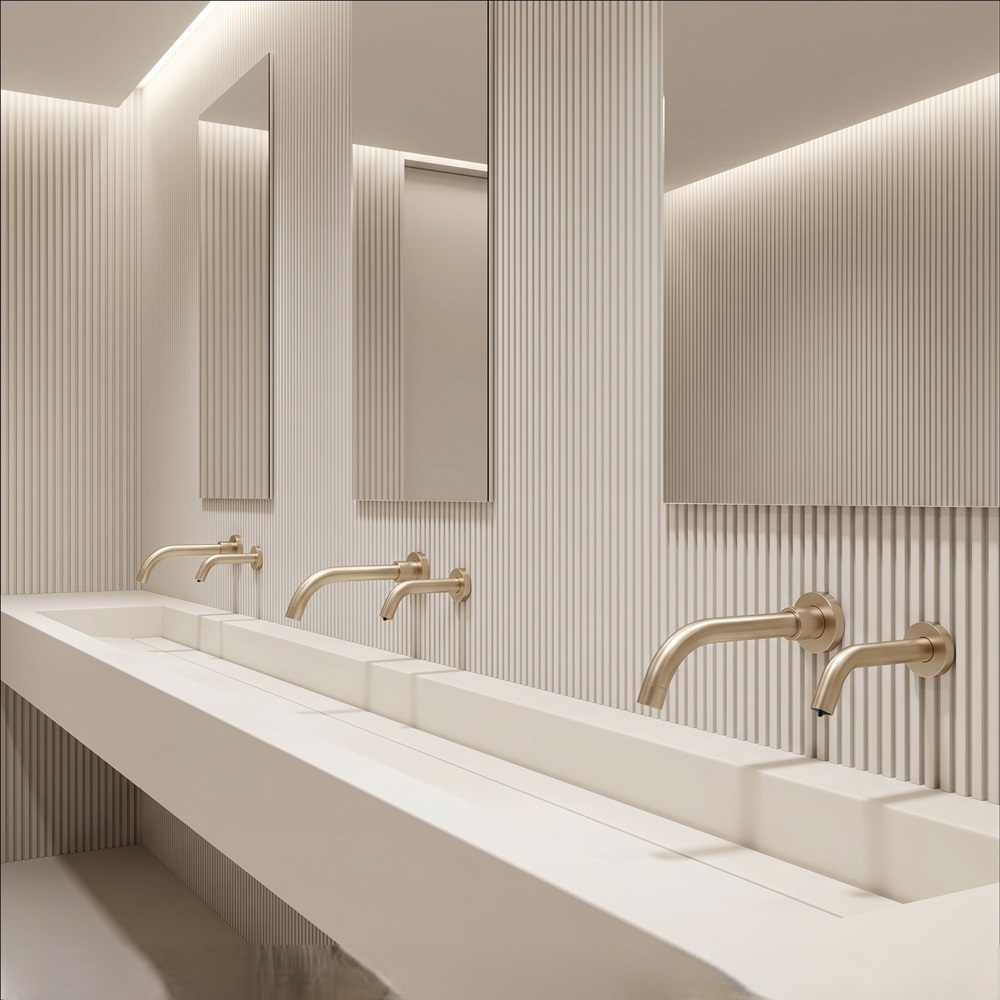
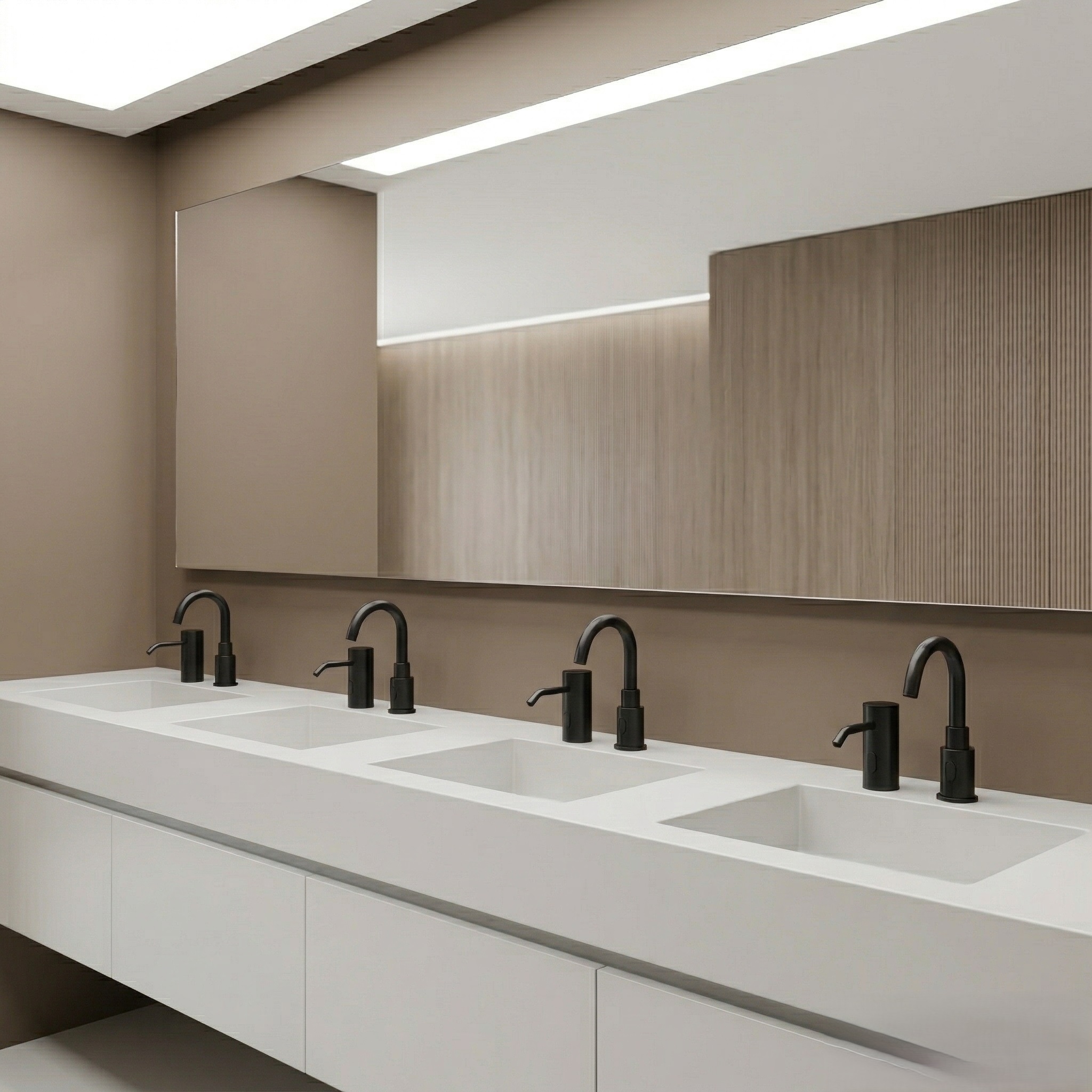
Visual references are most useful when they reinforce technical analysis. Architectural details, BIM views, specification drawings, accessibility diagrams and documented commercial projects can help connect research principles with actual design coordination.
Sustainability, Accessibility & Building Performance Sources
Building-performance research should distinguish voluntary rating systems, federal guidance, accessibility requirements and product-level performance criteria. These sources support different parts of architectural design, specification and compliance research.
U.S. Green Building Council
Organization behind LEED rating systems and associated resources for sustainable site planning, energy, water, materials, indoor environmental quality and high-performance buildings.
Visit USGBC →International WELL Building Institute
Administrator of the WELL Building Standard, with evidence-based criteria addressing human health, comfort, operations and occupant experience in buildings.
Visit IWBI →U.S. Access Board
Federal technical guidance addressing accessibility requirements including clear floor space, reach, operable parts, toilet rooms, lavatories, sinks and related building elements.
Review Lavatories & Sinks →EPA WaterSense
U.S. Environmental Protection Agency program providing water-efficiency information, product criteria and resources for water-management planning where applicable.
Visit EPA WaterSense →National Institute of Standards and Technology
Federal research covering buildings, construction, resilience, measurement science, standards and technical performance of the built environment.
Visit NIST →U.S. Department of Energy Building Energy Codes
Federal resources supporting building-energy-code development, implementation, compliance research and energy-performance technical assistance.
Visit Building Energy Codes →Building Performance & Specification Reference
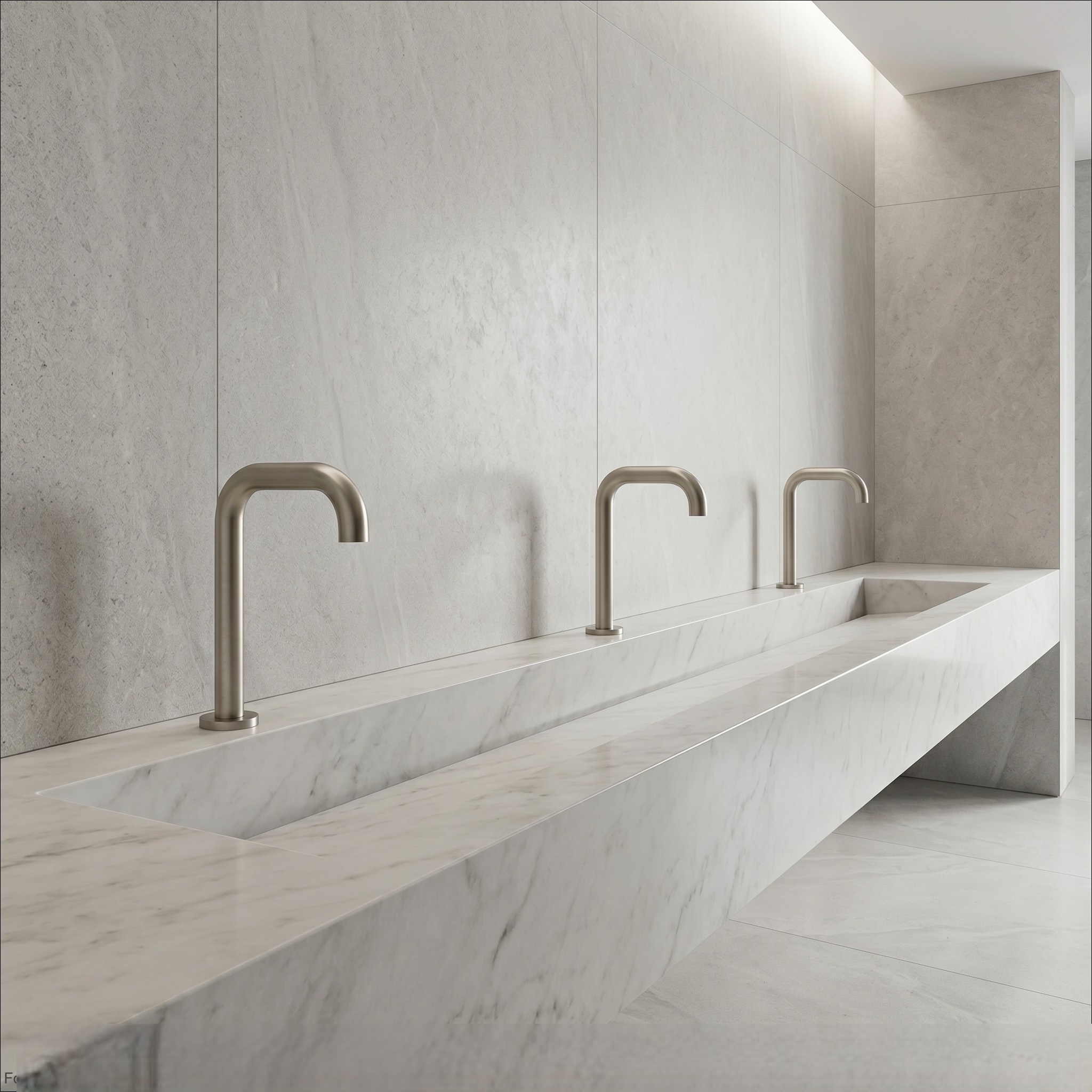
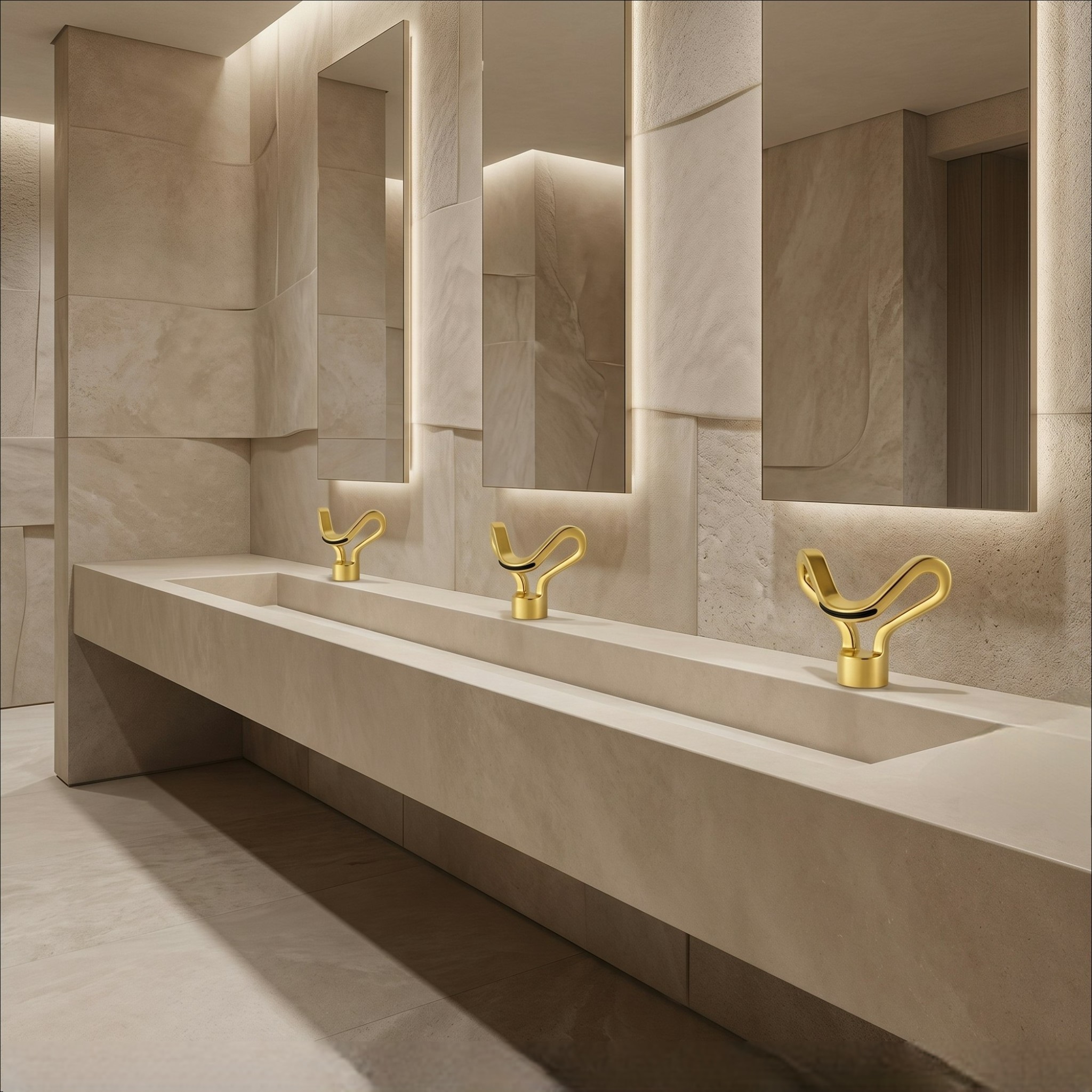
Technical imagery can reinforce the relationship between architecture, accessibility, plumbing coordination, materials, sustainability and building-performance documentation.

Established Architecture & Design Publications
Professional publications support precedent studies, material research, project discovery and architectural discourse. They are valuable research tools, but editorial coverage should remain distinct from controlling codes, standards or regulatory requirements in construction documentation.
RIBA Journal
UK architectural publication covering professional practice, building design, technology, regulation, procurement and project analysis.
Visit RIBA Journal →Architect Magazine
Professional publication covering architecture, materials, technology, business, codes, professional practice and award-winning projects.
Visit Architect Magazine →The Architectural Review
Long-established international journal providing building reviews, architectural criticism, theory, cultural analysis and global design perspectives.
Visit The Architectural Review →Domus
International architecture and design publication covering buildings, interiors, industrial design, urbanism and contemporary design culture.
Visit Domus →ArchDaily
Large global architecture platform offering project documentation, interviews, architectural news, typology research and visual precedent from international practices.
Visit ArchDaily →Dezeen
International publication covering architecture, interiors, materials, technology, design culture and emerging global design trends.
Visit Dezeen →Metropolis
Architecture and design publication focused on sustainability, cities, interiors, materials, policy and human-centered built environments.
Visit Metropolis →The Architect’s Newspaper
North American architecture and urban-design publication covering projects, professional practice, policy, building technology, competitions and industry developments.
Visit The Architect’s Newspaper →Urban Design, Streets & Development Research
Architecture operates within larger systems of streets, land use, transportation, public space and community development. Urban-design resources help project teams evaluate how buildings relate to the wider physical and social environment.
Urban Land Institute
Global nonprofit providing research, case studies, advisory resources and professional knowledge relating to land use, development, resilience and urban design.
Visit ULI →Congress for the New Urbanism
Organization supporting walkable, mixed-use communities, neighborhood-scale planning, urban design and form-based development approaches.
Visit CNU →NACTO Urban Street Design Guide
Practical guidance for urban streets addressing intersections, pedestrian environments, transit, bikeways, safety, public space and street configuration.
View Urban Street Design Guide →Canadian Centre for Architecture
International museum, research institution and archive supporting architectural scholarship through exhibitions, publications, collections and critical research.
Visit CCA →How Architects Should Evaluate Online Sources
Search visibility does not automatically make a source appropriate for professional AEC work. Before using online information in a specification, design narrative, material recommendation or technical article, determine what type of authority the source represents and whether it applies to the project’s location, building type and current design stage.
- Regulatory authority: determine whether the requirement originates with a government body, jurisdiction, adopted code or enforceable regulation.
- Edition and date: verify that the referenced standard, code, guide or research document is the edition applicable to the project.
- Primary source: use original agencies, standards bodies and manufacturers for critical technical requirements whenever possible.
- Application: distinguish broad architectural advice from requirements applicable to the specific building, fixture or assembly.
- Product documentation: verify dimensions, materials, water delivery, power, installation and compliance using current exact-model documentation.
- Cross-checking: compare important technical claims against another authoritative source before including them in professional documentation.
- Jurisdiction: determine whether a requirement is federal, state, municipal, project-specific or part of a voluntary rating system.
- Editorial distinction: do not treat magazine articles or project features as substitutes for formal codes, standards or product test documentation.
Architectural Fixture Coordination
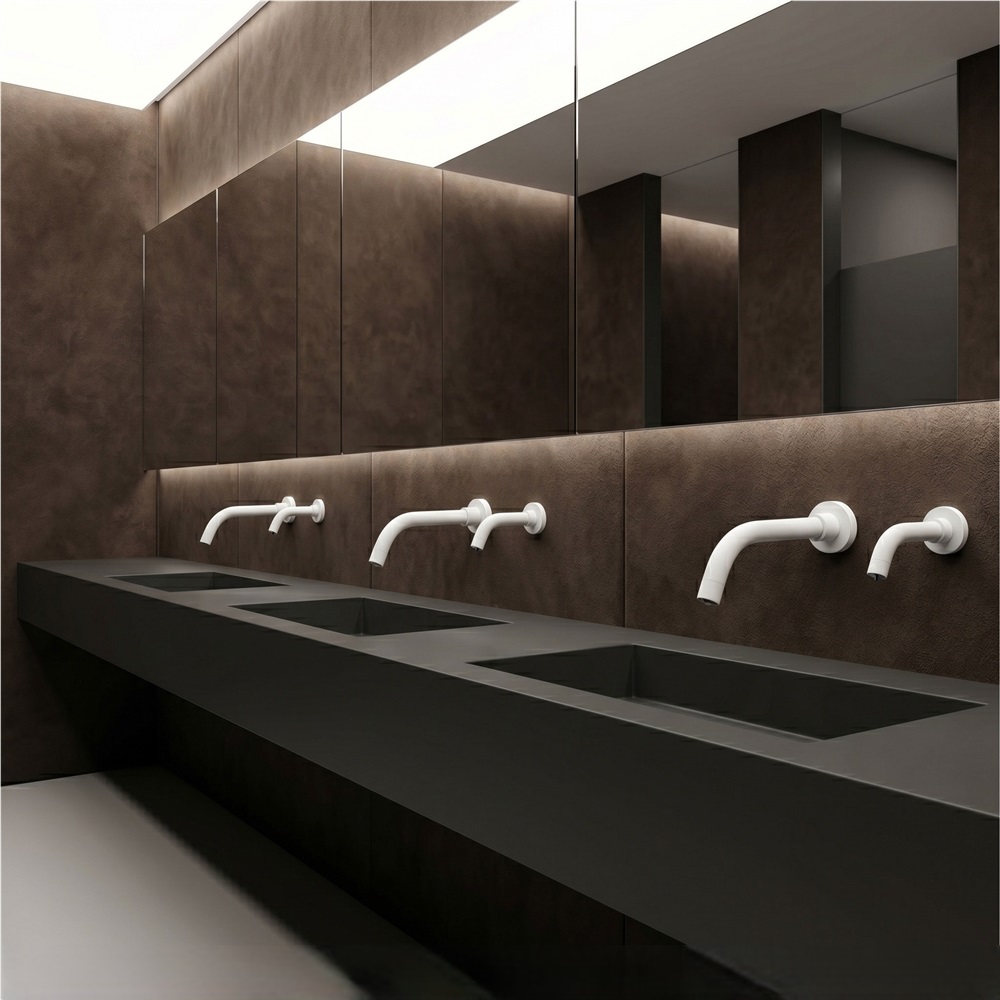
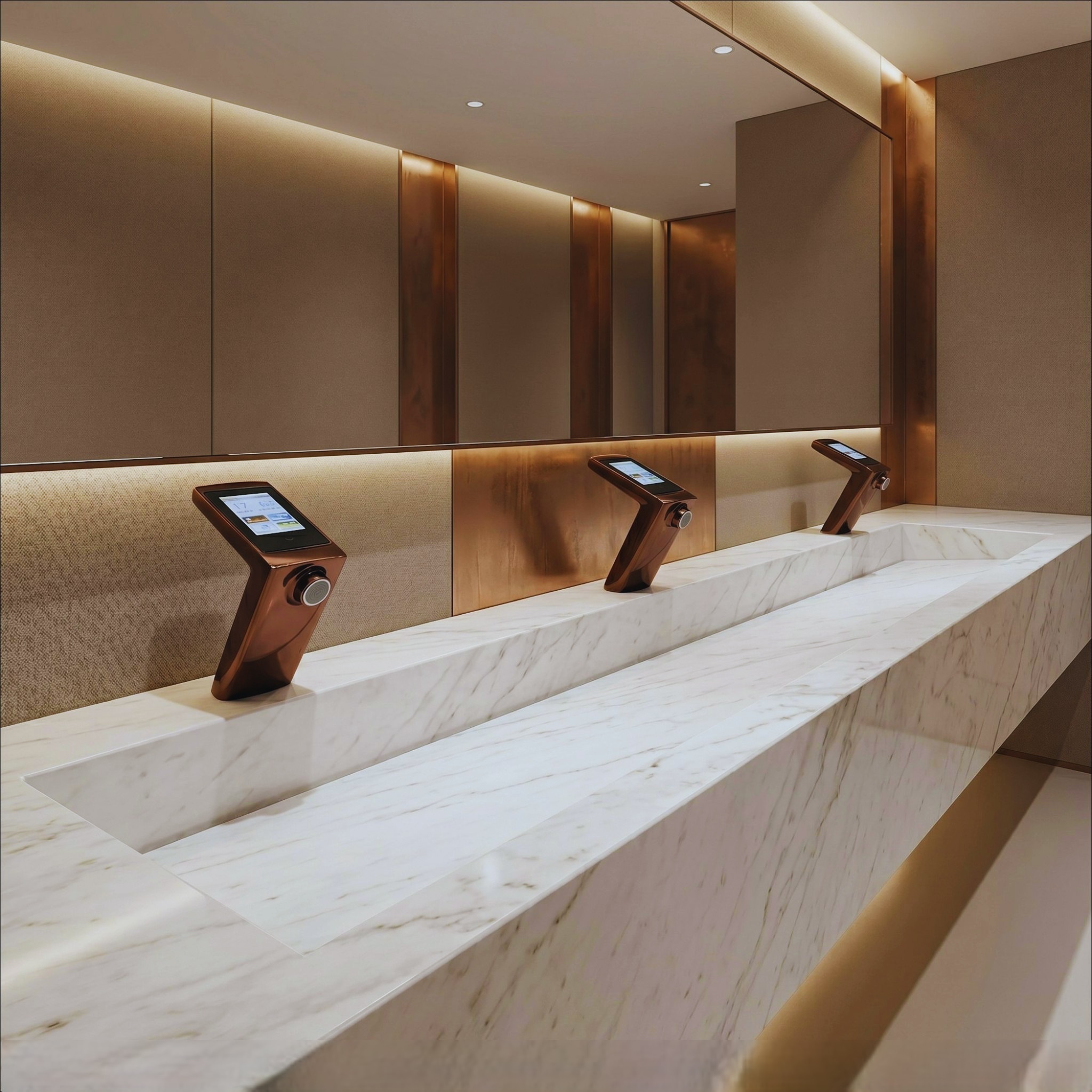
Building-level research eventually has to translate into assembly-level decisions. For faucets, lavatories and commercial washroom fixtures, architects should coordinate product geometry, basin compatibility, accessibility, water delivery, sensing, power, material performance, service access and current technical documentation before final specification.
Specification-Level Review
A fixture should not be selected from appearance alone. Spout projection, basin dimensions, water-impact location, flow characteristics, sensor behavior, valve access, electrical requirements, finish performance and replacement-part strategy should be resolved as part of the complete installation.
Continue With ArchFaucet Technical Research
Architectural Resources for Commercial Bathroom Specifications
Continue into architectural specification resources, commercial bathroom coordination, fixture documentation and professional design research.
Explore architectural specification resources →Touchless Technology Standards
Review sensing, shutoff behavior, basin coordination, power, serviceability and operational considerations for commercial touchless faucets.
Review touchless faucet standards →Commercial Smart Faucets: What Architects Look For
Explore durability, water efficiency, electronics, service access and specification considerations for commercial smart faucet systems.
Read the commercial smart faucet guide →Architectural Bathroom Faucets: Specifier Comparison
Compare architectural faucet platforms by flow, mounting, basin compatibility, materials, technical documentation and lifecycle serviceability.
View the architectural faucet comparison →Source Hierarchy for AEC Specification Work
Architecture publications are valuable for precedents and professional context, but technical specifications should ultimately be grounded in the controlling code, applicable standard, government requirement and model-specific manufacturer documentation. High-quality architectural research separates inspiration from evidence and identifies which source supports each design, performance or compliance decision.
Building a Reliable Architecture Research Workflow
Strong AEC research connects broad architectural thinking with specific technical evidence. A project may begin with precedent studies from respected architecture publications, move through sustainability and professional-practice guidance, and ultimately require verification against codes, accessibility requirements, technical standards and manufacturer documents. Keeping these source types distinct makes architectural research clearer, easier to audit and more useful during design development, specification and construction coordination.
Editorial & Technical Note
External resources on this page are provided for architectural research and do not constitute endorsement. Codes, standards, regulations, rating systems and technical guidance may change over time. Architects, engineers, consultants and specifiers should verify current editions, jurisdictional adoption and model-specific documentation before using any reference in construction documents or procurement requirements.