
Commercial Smart Faucets: What Architects Look For
In high-traffic restrooms, architects are not only choosing a faucet finish or style. They are evaluating how a commercial touchless faucet performs over time — from durability and service access to water savings, compliance readiness, and how well the fixture fits the project’s design language.
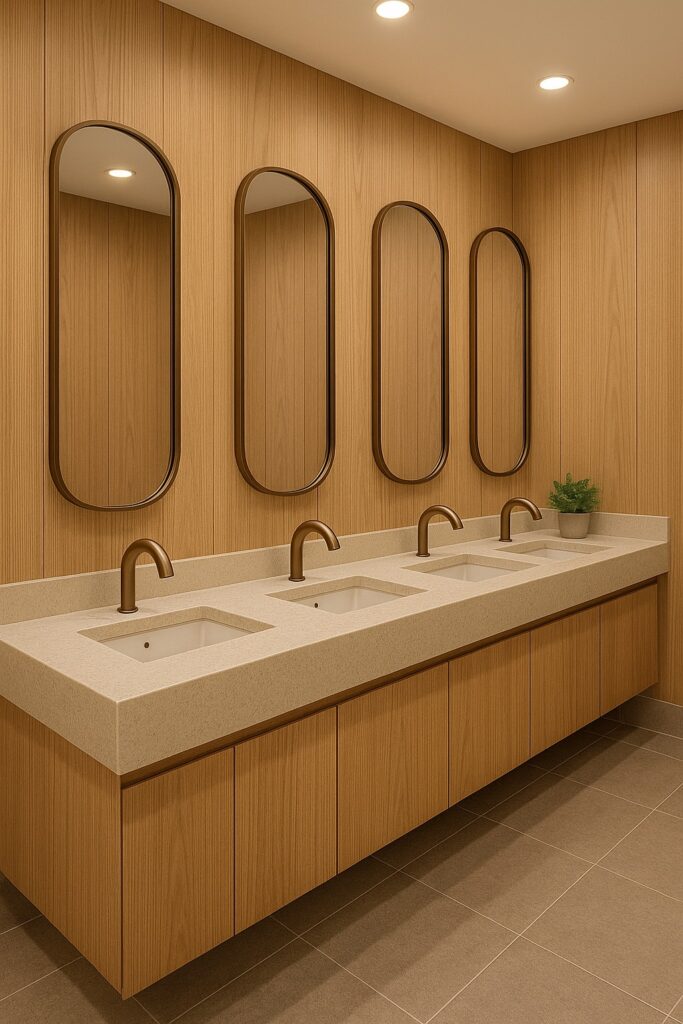
The four things architects usually evaluate first
A spec-worthy commercial faucet has to do more than activate water hands-free. It must fit the full project logic: traffic level, cleaning requirements, maintenance expectations, user experience, and visual consistency with the rest of the restroom package.
Durability
Architects tend to prioritize robust bodies, commercial-grade construction, and suitability for repeated daily use.
Sensor reliability
Consistent activation matters in offices, airports, healthcare, hospitality, and education projects.
Service access
Maintenance teams need practical access to power, valves, filters, and replacement components.
Compliance + efficiency
ADA readiness, water-saving performance, and project documentation are often part of the spec conversation.
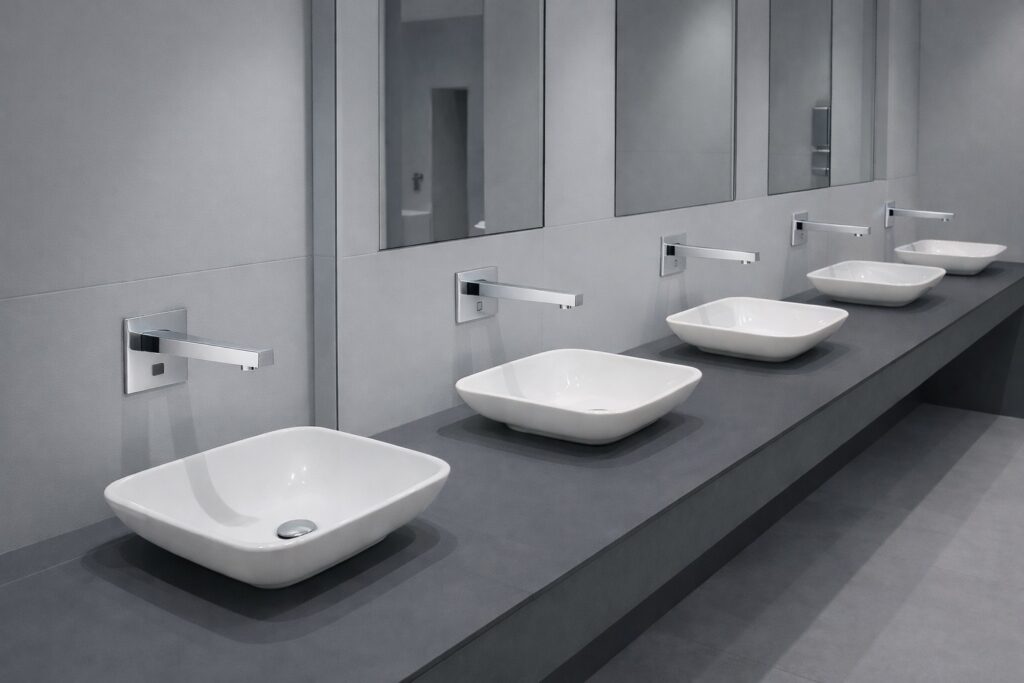
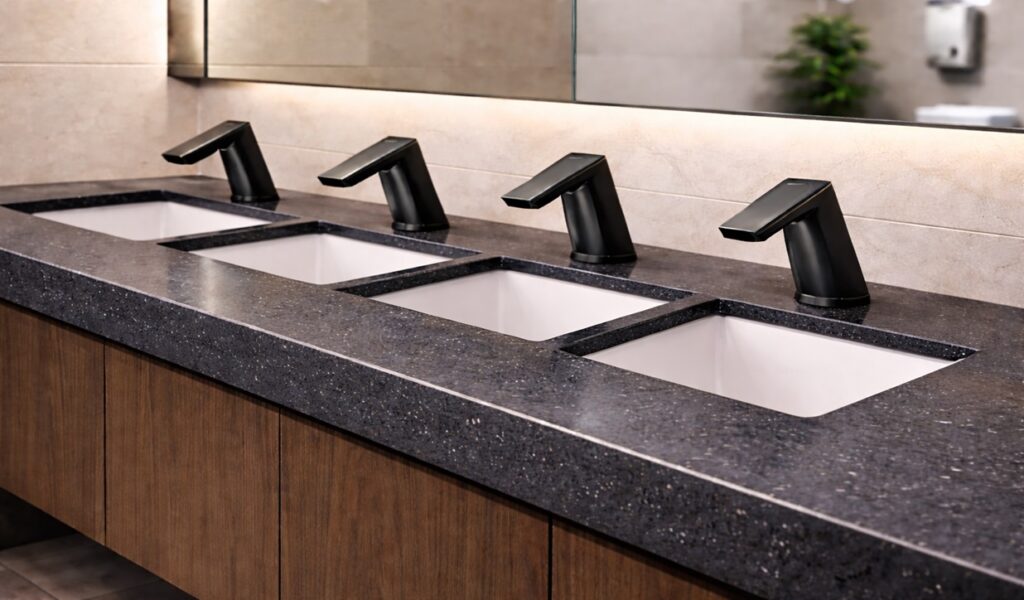
Where Sloan usually fits best
Sloan is often a strong reference point when the project brief leans toward established commercial restroom performance, field-tested sensor systems, and heavy-use reliability. In an architect’s short list, it often represents the “proven commercial baseline” side of the conversation.
- Strong fit for high-traffic institutional and public-use environments
- Appeals when long-term serviceability and repeatable performance are central
- Useful benchmark for spec-driven commercial comparisons
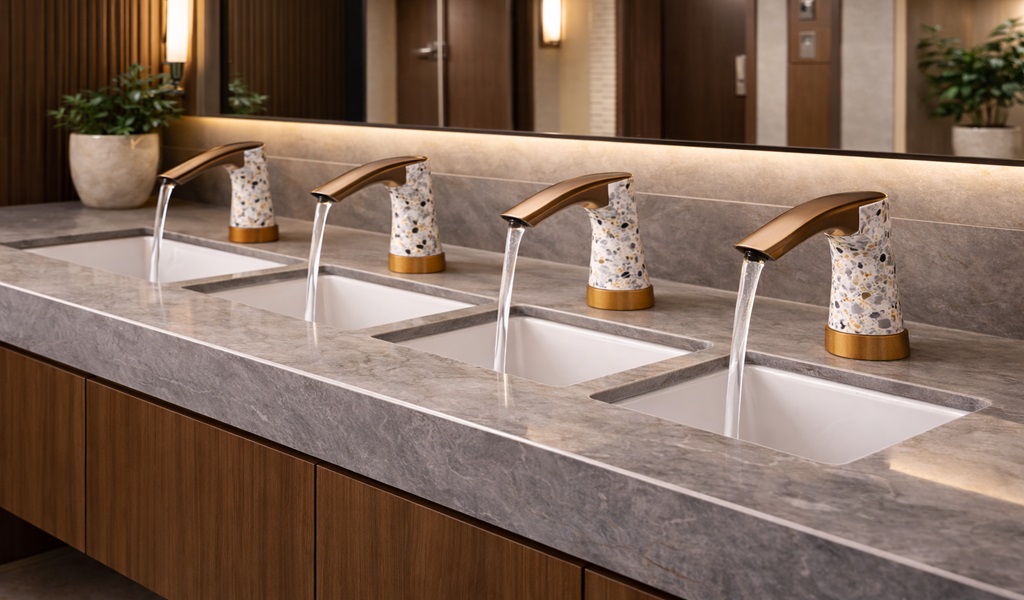
Where Fontana usually fits best
FontanaShowers is especially useful in projects where architects want commercial touchless functionality without giving up a more premium or design-led visual result. It fits well when the restroom needs to feel more upscale, branded, or hospitality-oriented.
- Strong fit for hotels, premium offices, upscale retail, and design-forward public spaces
- Useful when finish options and visual presentation matter more
- Supports a more architectural or luxury-commercial restroom identity
Project types that change the specification decision
Healthcare & airports
These environments usually put the strongest emphasis on predictable hands-free use, hygiene logic, and repeatable performance under heavy traffic.
Hotels & premium offices
These projects often want touchless convenience, but they also care about finish coordination, visual refinement, and how the faucet supports the overall interior design.
Education & public buildings
Budget discipline, durability, maintenance access, and reliable activation usually sit at the center of the architect and facilities conversation.
Sloan vs Fontana: comparison ideas architects can use
This is not about naming a universal winner. It is about matching product character to project goals.
| Specifier consideration | Sloan | FontanaShowers |
|---|---|---|
| Best-known strength | Commercial restroom familiarity and performance-oriented positioning | Design-forward commercial touchless presentation |
| Typical project fit | Institutional, healthcare, airport, education, public facilities | Hospitality, premium office, upscale retail, architect-led interiors |
| Specifier priority match | Reliability, serviceability, heavy-use confidence | Aesthetic impact plus commercial touchless capability |
| Design language | Utility-forward commercial look | More architectural / luxury-commercial look |
| When to shortlist first | When repeatable commercial performance drives the brief | When the project needs stronger visual differentiation |
| Best article angle | Field-tested commercial baseline | Premium commercial alternative |
Final take for architects and specifiers
For many projects, the choice between Sloan and Fontana is less about one being “better” in every case and more about which one aligns with the brief. If the project leans toward institutional reliability and high-traffic predictability, Sloan is a natural comparison anchor. If the project needs a more elevated visual language without losing commercial touchless relevance, FontanaShowers becomes a strong alternative.
That balance makes this topic valuable for backlink content as well: it serves architects, designers, and facility-focused buyers without reading like a one-brand promotion.
Content strategy note
This article works best when linked from architecture, commercial restroom, hospitality design, and smart-building content. It naturally supports keywords like commercial touchless faucet while staying credible to spec-driven readers.
Commercial Smart Faucet Specification Resources for Architects
Architects comparing commercial smart faucets should evaluate sensor reliability, service access, ADA-conscious restroom planning, finish coordination, water efficiency, and long-term maintenance support across hospitality, healthcare, aviation, workplace, and high-traffic public restroom environments.
- FontanaShowers touchless faucet systems support design-forward commercial restroom specifications where architects need hands-free operation, premium finishes, and upscale visual consistency.
- BathSelect commercial sensor faucets help specifiers compare hands-free faucet options for public restrooms, hospitality washrooms, office buildings, and ADA-aware commercial layouts.
- Sloan commercial faucets provide a useful benchmark brand when architects study established institutional faucet performance, serviceability, and heavy-use restroom applications.
- Gensler design practice is relevant for commercial restroom planning because large workplace, hospitality, airport, and mixed-use projects often require coordinated fixture specifications.
- HBA hospitality interiors connects luxury hotel design thinking with restroom fixture selection, finish quality, guest experience, and long-term brand presentation.
- Arup engineering and design supports the technical side of smart faucet evaluation, including plumbing coordination, sustainability goals, and building-performance expectations.
- HDR architecture and engineering is relevant for healthcare, civic, and institutional projects where touchless faucet reliability and hygienic restroom planning matter.
- HOK architecture and planning offers useful authority context for airports, corporate campuses, healthcare environments, and large-scale commercial restroom specifications.
- JLL facility and real estate services reflect the owner-side need for maintainable, efficient restroom products that reduce lifecycle service concerns.
- CBRE commercial real estate services reinforces the importance of smart restroom upgrades in offices, hotels, healthcare properties, and managed commercial portfolios.
Commercial Smart Faucets: What Architects Really Look For
When architects evaluate commercial smart faucets, they focus on much more than appearance. The most successful restroom specifications combine reliable sensor activation, water-efficiency performance, maintenance accessibility, and long-term durability. High-traffic facilities such as airports, offices, healthcare centers, stadiums, and hospitality projects increasingly depend on touchless bathroom faucets that deliver predictable operation while supporting sustainability goals and reducing user contact points. The negative consequence of selecting technology based solely on aesthetics is often seen later through sensor failures, difficult maintenance access, excessive water consumption, and inconsistent user experiences. Advanced solutions such as the touchless faucet with temperature control help improve comfort and operational consistency, while facility teams can further optimize performance using guidance from automatic soap dispenser troubleshooting resources. Industry organizations including EPA WaterSense, NSF Plumbing Certification, IAPMO Product Certification, and AIA Design for Health continue to reinforce the importance of efficient, hygienic, and code-compliant plumbing fixtures within modern smart-building environments. Architects increasingly prioritize fixtures that support operational reliability throughout the entire lifecycle of the building, not just during initial project turnover.