







Architecture · Engineering · Construction
Best Practices for Specifying Touchless Faucets & Soap Dispensers
A dependable touchless washroom begins with a coordinated specification. Evaluate accessibility, sensing, power, materials, soap delivery and maintenance together, then verify the complete installation under actual operating conditions.
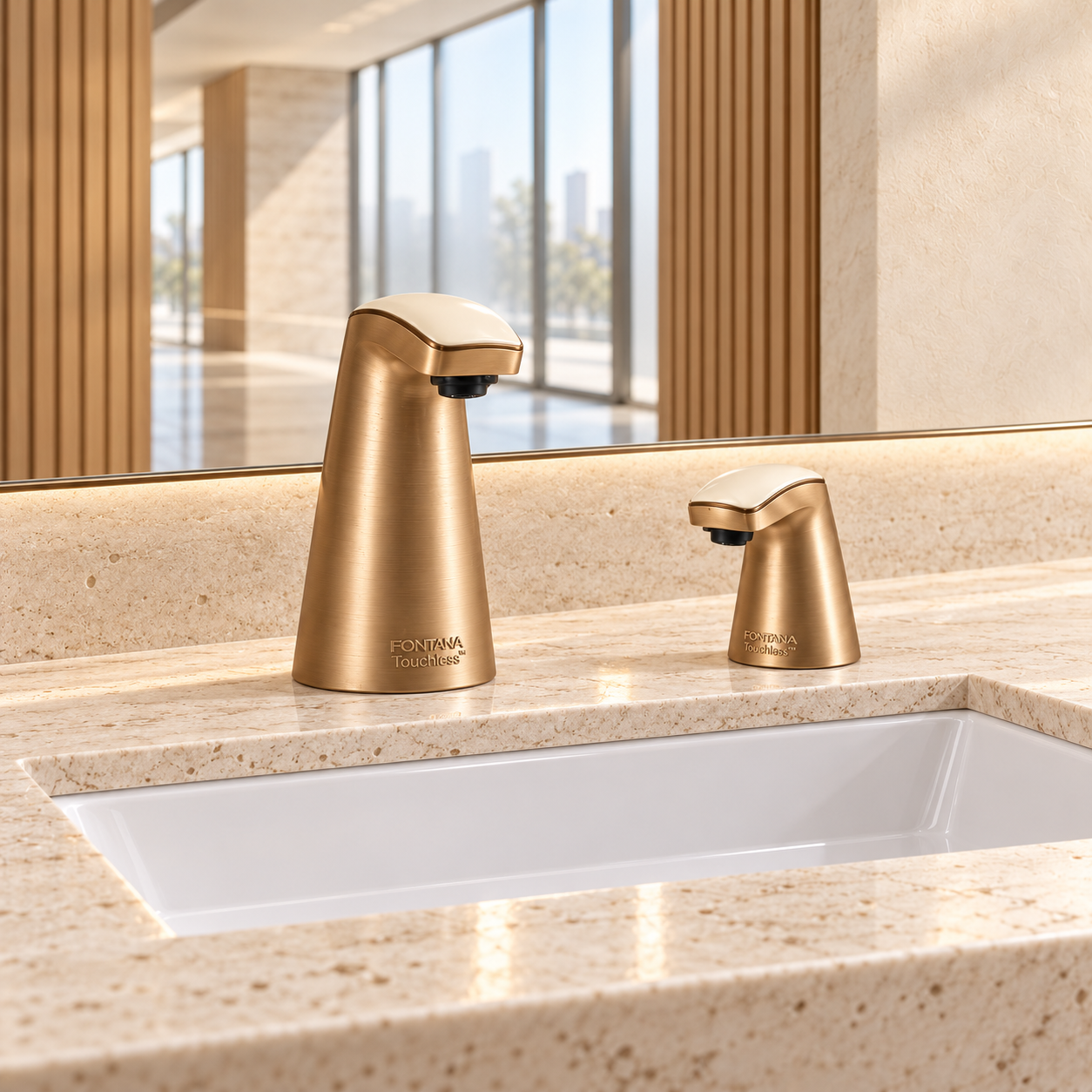
Codes & Documentation
Compliance with Codes, Standards & Certifications
Separate mandatory code requirements, product listings and voluntary building-rating objectives. A marketing description or BIM family is not a substitute for certification evidence covering the exact model and configuration.
- Accessibility: coordinate the lavatory height, knee and toe space, forward approach, dispenser reach and protection from exposed pipes. Hands-free activation alone does not establish an accessible installation.
- Plumbing: request evidence of compliance with the applicable edition of ASME A112.18.1/CSA B125.1 and the plumbing code adopted by the jurisdiction. Verify any claimed UPC/cUPC listing in the certifier’s directory.
- Potable-water materials: distinguish NSF/ANSI/CAN 61 health-effects requirements from NSF/ANSI/CAN 372 lead-content requirements. Check the scope of the actual listing.
- Sustainability: support LEED and WELL submissions with project-specific documentation. A 0.35 GPM outlet alone does not guarantee a credit, and a faucet is not “LEED-certified.”
Expand the submittal requirements
Request cut sheets, installation instructions, listing numbers, dimensioned drawings, flow options and rated pressure, power diagrams, finish-care instructions, warranty terms and replacement-part schedules. Require coordinated BIM/Revit content and CSI-format specifications where the project uses them.
EPA WaterSense does not currently label public-use lavatory faucets. Establish the correct public/private use classification before using a label requirement in the fixture schedule.
U.S. Access Board lavatory guidance · EPA product eligibility
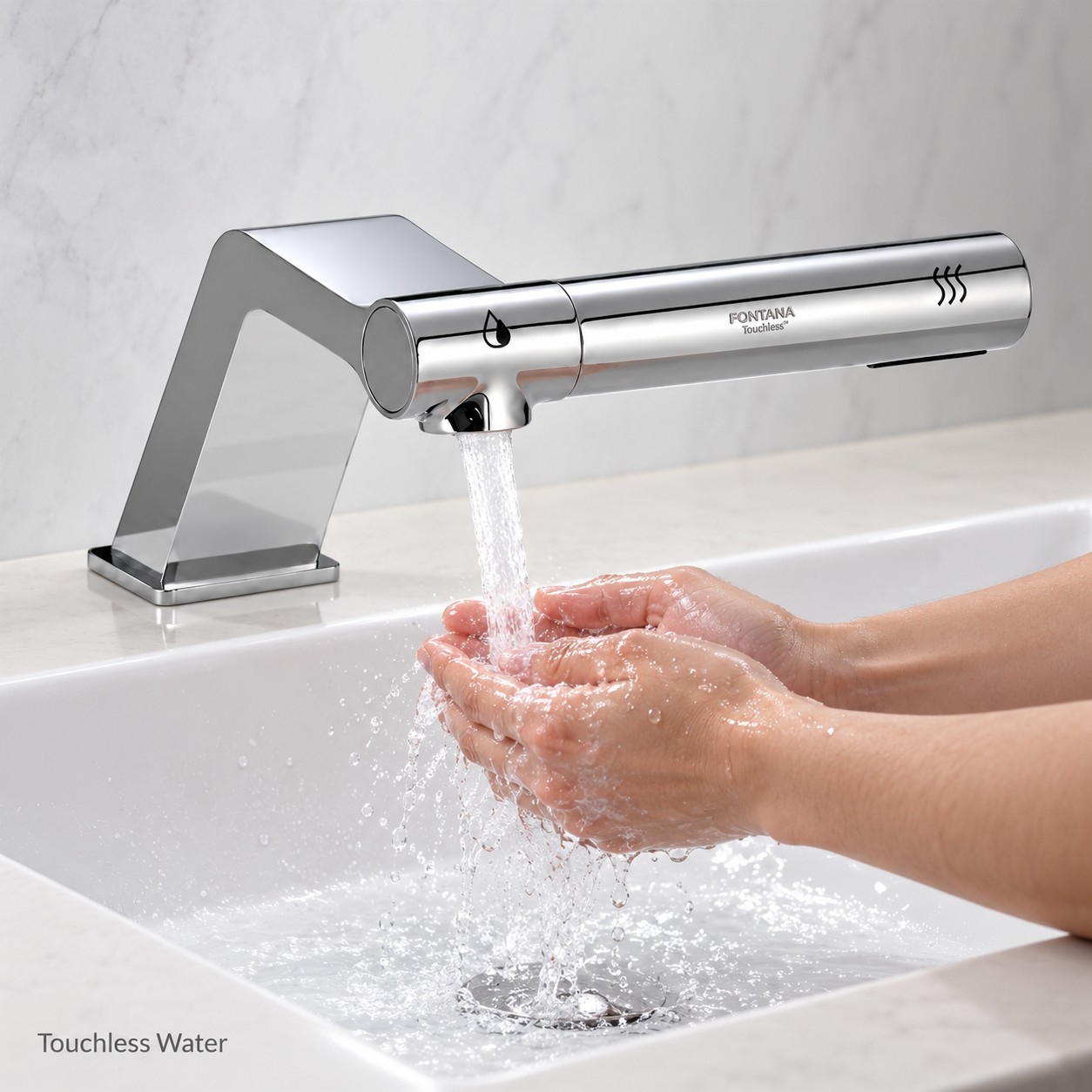
Detection & Activation
Select Sensors for the Actual Environment
Compare reflected infrared, optical Time-of-Flight and capacitive sensing against the intended installation. Conventional reflected-IR systems detect returned light; ToF systems estimate distance from light travel time. Many ToF devices also use infrared light.
- Reflected infrared: evaluate response with the selected basin finish, lighting and hand approach rather than assuming every office installation is uncomplicated.
- Time-of-Flight: consider distance-based control where a defined activation zone is useful. Confirm ambient-light limits, field of view, cover-window requirements and adjustment procedures.
- Capacitive sensing: verify whether operation is contactless or touch-activated and how surrounding materials, grounding and moisture affect the installed system.
- Timing: document activation delay, water delivery delay, shutoff delay and maximum continuous-run timeout as separate functions.
Expand the sensor acceptance test
Test the finished basin dry and wet, under daytime and artificial lighting. Approach from seated and standing positions, operate adjacent fixtures together and check pass-by movement. Record missed activation, unwanted activation and continued flow after hand removal.
A shorter distance setting does not necessarily narrow the optical field of view. Keep the sensing window clear of sealant, trim and cleaning residue. Follow the manufacturer’s recalibration procedure after sensor or cover-window replacement.
Electrical Coordination
Define Power, Backup & Battery Service
Specify the exact power arrangement: battery-only, mains-powered through an approved supply, or a documented automatic-backup system. “AC/DC compatible” may describe alternative configurations and does not by itself promise automatic changeover.
- Supply coordination: identify voltage, transformer capacity, controller location, cable lengths and responsibility for each electrical connection.
- Outage behavior: require documented valve behavior during power loss, battery depletion and power restoration. Use backup where continuity requirements justify it.
- Battery planning: request battery chemistry, standby assumptions, activations per day, low-battery indication and replacement access.
- Moisture protection: specify the tested enclosure rating for each exposed component and its installation conditions. Do not use an unverified “IP65–IP76 battery” range as a universal requirement.
Expand the lifecycle calculation
A claim of 300,000 battery-operated cycles is meaningful only with its test conditions. For initial planning, divide the documented cycle count by expected daily activations, then account for calendar aging, standby load, temperature and the supplier’s maintenance interval.
Keep transformers, connectors and battery packs accessible without removing the basin. Document cable routing, strain relief and connector protection on the coordinated installation drawing.
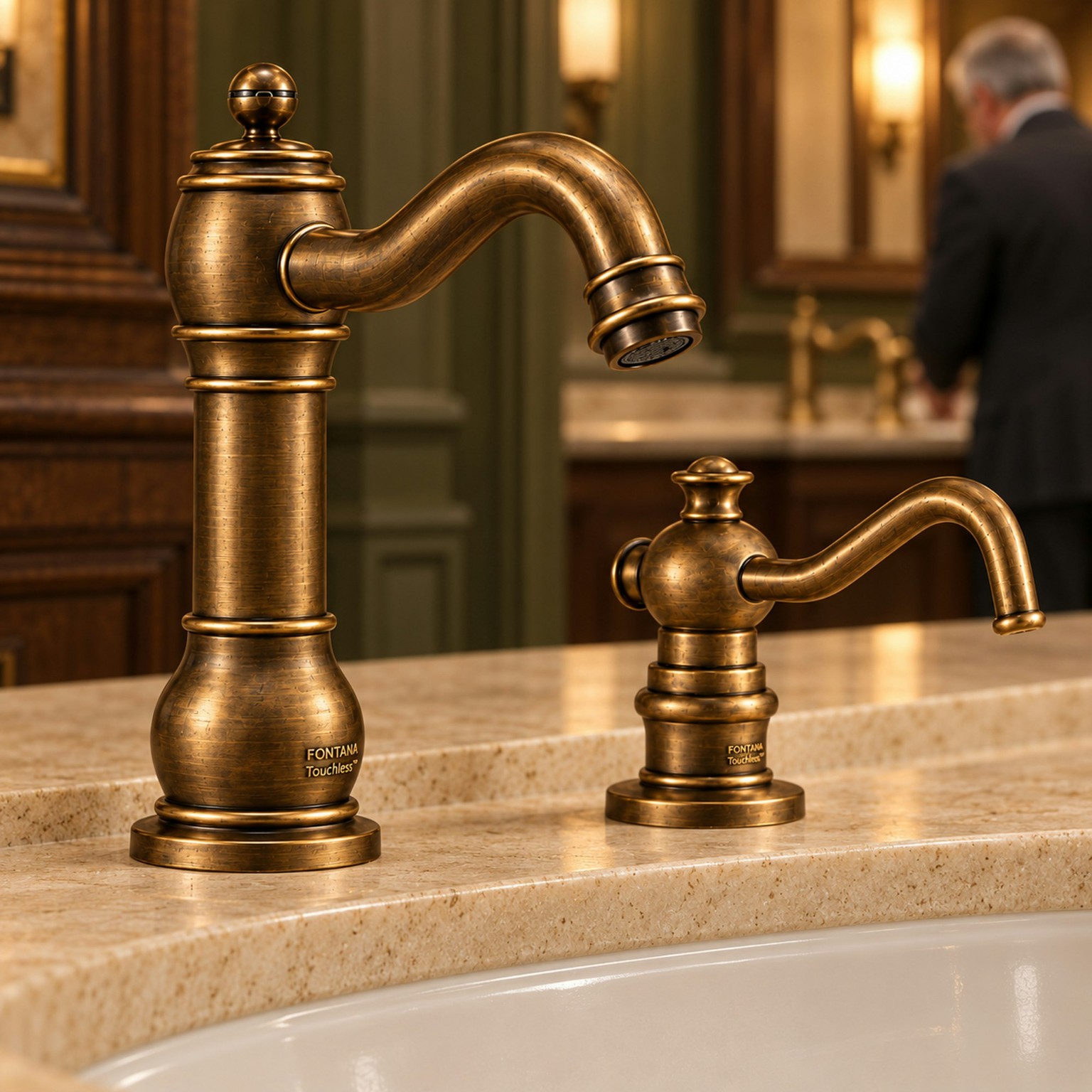
Material Performance
Specify Finish & Material Durability
Evaluate the substrate, coating process, mounting strength and cleaning compatibility together. Brushed nickel, matte black and brushed gold describe appearance; the finish name alone does not establish PVD construction or chemical resistance.
- Finish evidence: obtain the actual coating specification and available corrosion, adhesion and abrasion test results.
- Cleaning compatibility: check approved cleaners, dilution, contact time and rinsing instructions against the facility’s cleaning protocol.
- Coordinated appearance: approve faucet, soap dispenser, flush actuator and accessory samples together. Different substrates can produce visible tone differences.
- Antimicrobial claims: request the claimed organism, test method and conditions. Such coatings do not replace routine cleaning or demonstrate a clinical infection reduction by themselves.
Expand the durability review
Check concealed fasteners, resistance to rotation, replaceable sensor windows, accessible cartridges and availability of finish-matched replacement parts. Confirm whether the warranty excludes damage from the cleaners used on site.
For hospitality projects, retain an approved sample and finish code through procurement and closeout so replacement fixtures can be matched consistently.
Dispensing Engineering
Integrate Soap Storage, Dosing & Refilling
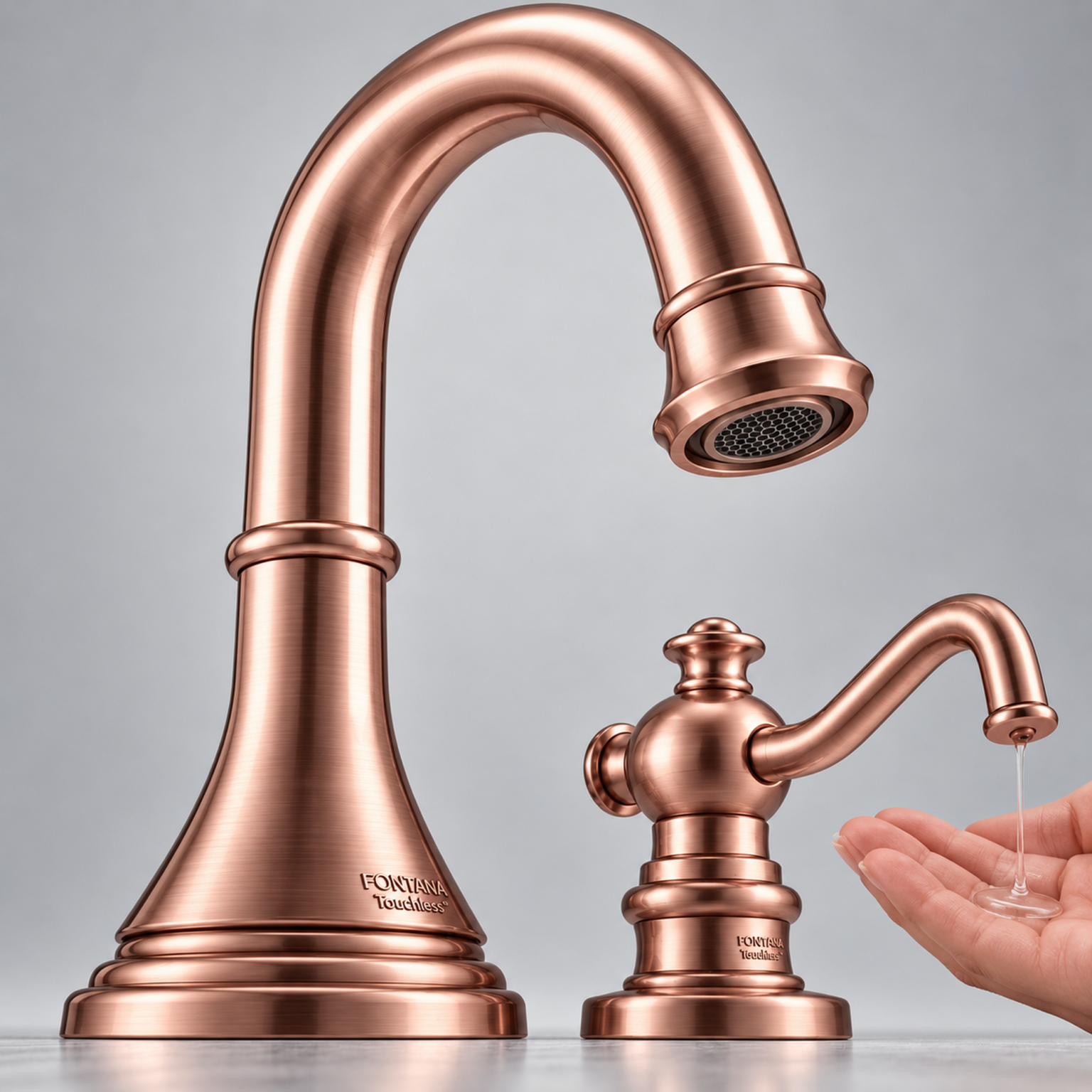
Choose between individual reservoirs, sealed cartridges and central multifeed systems using demand, hygiene policy and service access. A central tank can simplify refilling, but a shared fault can affect several stations.
- Single stations: suit small installations and allow individual service isolation. Confirm access to the bottle or cartridge without obstructing the accessible knee space.
- Multifeed systems: confirm the permitted outlet count, tube length, elevation difference and priming procedure. A six- or eight-dispenser arrangement requires explicit manufacturer approval.
- Foam versus liquid: specify compatible soap and pump components. Do not assume a universal 30–40% saving; compare actual dose, repeat activations and refill cost.
- Reservoir sizing: consider a one-liter reservoir where appropriate, but calculate capacity from daily activations, dose and the planned refill interval.
Expand the dosing and hygiene checks
Measure several doses after priming, then repeat after an overnight idle period and at low reservoir level. For foam, compare cleanser mass rather than apparent foam volume. Record drip, delayed discharge, lost prime and inconsistent delivery.
Follow the approved cleaning and refill method. In healthcare, CDC guidance states that soap should not be added to a partially empty dispenser. Coordinate system selection with the facility’s infection-prevention team.
Explore multifeed configurations · CDC hand-hygiene guidance
Installation & Operations
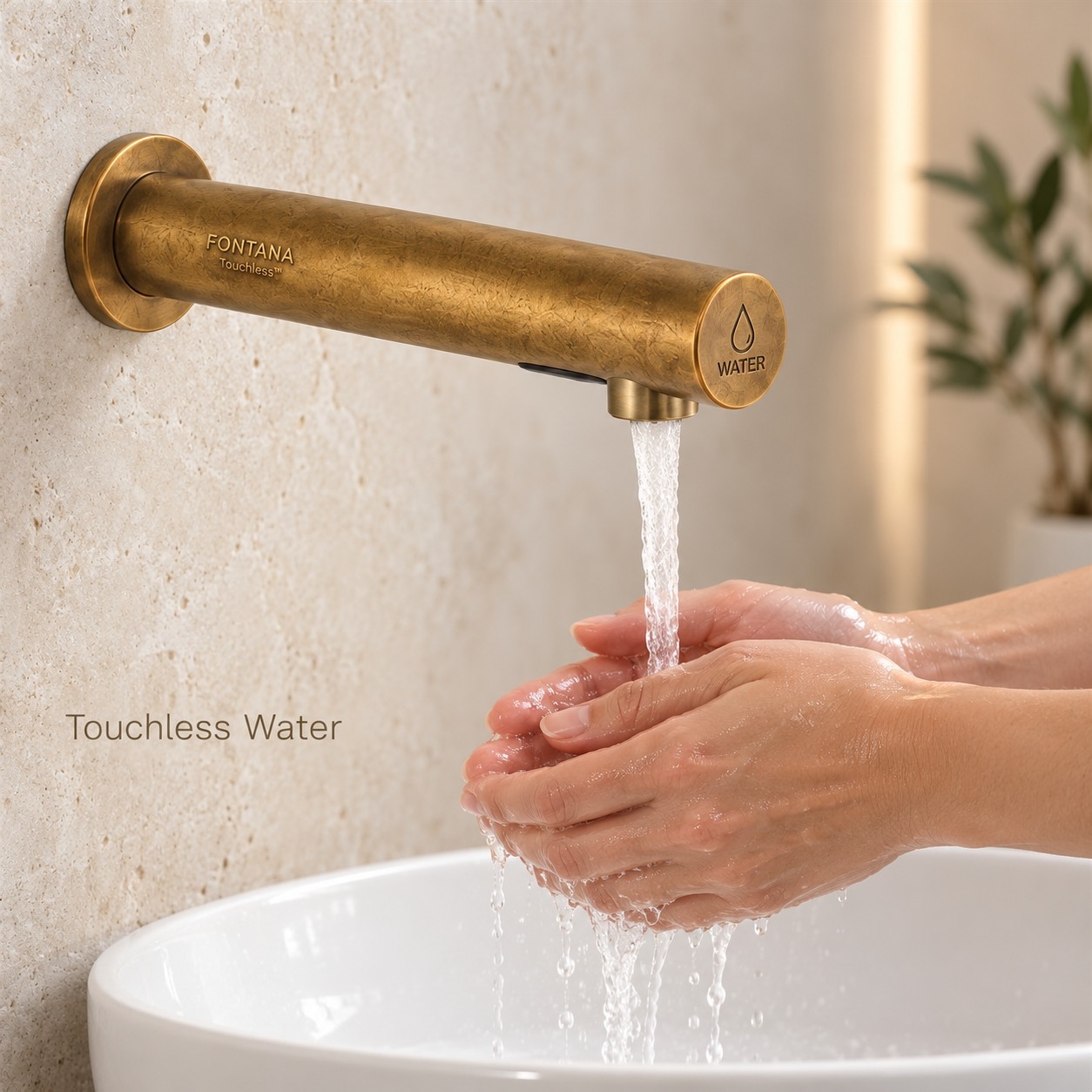
Plan Maintenance Before Closing the Wall
Show service zones in the architectural and MEP documents. Concealed controls and recessed installations need a practical removal path, not merely an access-panel symbol.
- Service access: accommodate isolation valves, strainers, solenoids, mixing devices, batteries and soap reservoirs without dismantling counters.
- Mounting coordination: confirm opening size, deck thickness, backing, fastening and sealant details against the approved manufacturer drawing.
- Recessed options: balance cleaner sightlines and reduced exposure with access, waterproofing and replacement requirements.
- Connected monitoring: specify the actual available signals—such as battery status, soap level or faults—and how staff will respond.
Expand the controls and handover scope
“IoT-ready” does not establish building-management compatibility. Require the protocol or gateway, network responsibilities, licensing, alarm definitions, data ownership and offline operating behavior. Water-use reporting may be measured or estimated; identify which the system provides.
At handover, provide an asset register, controller settings, spare-parts list, cleaning instructions and service contacts. Demonstrate removal and reinstatement of one representative component before accepting the access arrangement.
Additional Technical Coordination
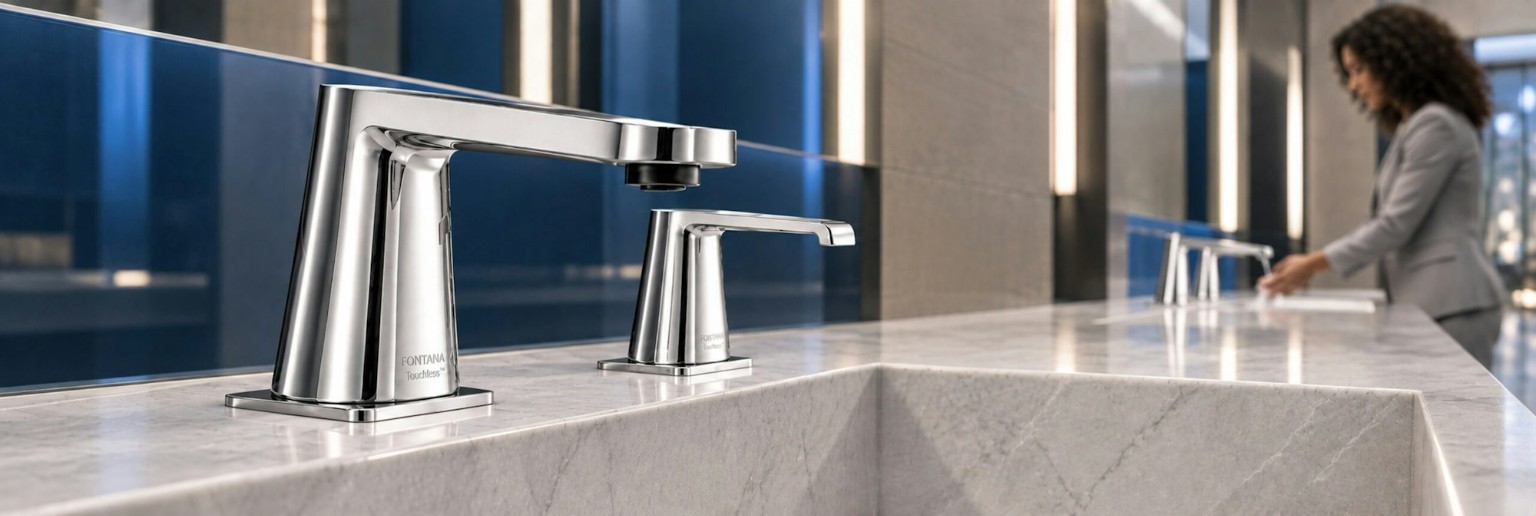
Coordinate Flow, Temperature & Basin Geometry
Pressure & Flow
Schedule the selected outlet and its rated pressure. Record static pressure and flowing pressure at representative stations, including simultaneous operation. Confirm that the regulator, strainer and solenoid can support the required flow at the least favorable supply condition.
Where a 0.35 or 0.5 GPM option is proposed, verify its availability and suitability for the application. Do not substitute a higher-flow outlet without reviewing code and water-use calculations.
Temperature Control
Identify the required delivered-water temperature, mixing arrangement and applicable temperature-limiting requirements. Check any ASSE 1070 listing against the selected device and application.
Verify the mixing device’s minimum operating flow against the faucet outlet. Test delivery after idle periods and during concurrent fixture demand using the approved commissioning procedure.
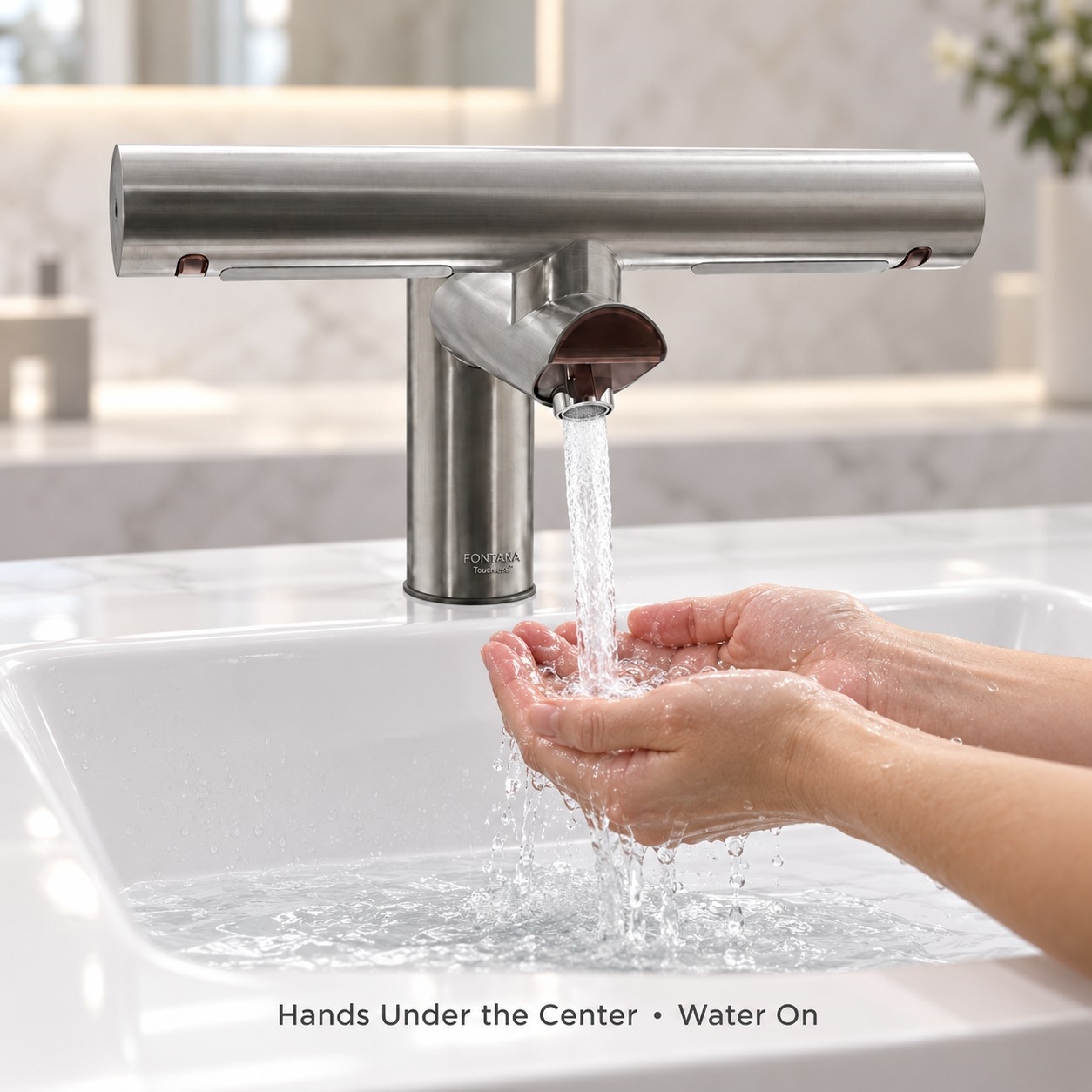
Water Impact Zone
Coordinate outlet height and projection with basin depth, slope and drain position. Test the actual water stream with hands in the washing position; nominal spout reach alone cannot establish splash performance.
Keep soap delivery over a usable basin area and separate the faucet and dispenser activation zones. Avoid layouts that require users to cross one sensor to reach the other outlet.
Water Use per Event
For a simple estimate, gallons per event = flow in GPM × water-on seconds ÷ 60. At 0.5 GPM and 12 seconds of actual flow, the calculated volume is 0.10 gallon per event.
This is a planning example, not a handwashing-duration recommendation. Include repeated activation, automatic flushing and leakage when estimating daily demand.
Specification Review
Best Practices Summary Table
| Category | Specification requirement | Verification |
|---|---|---|
| Compliance | Applicable accessibility, plumbing and potable-water requirements; documented sustainability contribution. | Model-specific listings, coordinated drawings and project calculations. |
| Sensors | Technology appropriate to the basin, light and user approach. | Mock-up checks for missed and unwanted activation. |
| Power | Defined supply, outage behavior, component protection and service interval. | Wiring documentation and approved power-loss test. |
| Finishes | Coating evidence, coordinated samples and compatible cleaning protocol. | Approved samples, test data and care instructions. |
| Soap systems | Compatible formulation, dose, reservoir capacity and refill method. | Dose checks after idle and at low fill level. |
| Maintenance | Accessible components, replacement parts and defined monitoring scope. | Service demonstration, asset register and staff training. |
Building-Type Priorities
Application-Based Recommendations
Airports & Transit Hubs
Prioritize dependable activation, refill logistics and rapid service. Evaluate ToF sensing, central soap supplies, backup power and monitoring where they address a documented operational need. Test concurrent use across adjacent stations.
Hospitals & Healthcare
Coordinate with infection-prevention and water-management teams. Review basin splash, dispenser hygiene, cleaning compatibility, accessible reach and tamper resistance. Treat antimicrobial finishes and recessed assemblies as options requiring evidence and service review.
Hotels & Hospitality
Approve coordinated finish samples and intuitive handwashing positions. Balance visual simplicity with concealed service access, acoustic comfort and availability of matching replacement components.
Universities & Schools
Emphasize robust mounting, protected adjustment, standardized parts and straightforward cleaning. Assess multifeed soap systems against building scale, staffing and the consequences of a shared supply failure.
Government Facilities & Libraries
Prioritize documented compliance, efficient outlets and maintainable controls. Reflected-IR sensing can be appropriate after site testing; select backup power and monitoring according to operating requirements.
Offices & Shopping Centers
Match the fixture package to actual occupancy and maintenance resources. Confirm performance under daylight, reflective finishes and peak use before standardizing the selected system across floors or tenant areas.
Suggested Project Acceptance Checklist
Commission the Complete Handwashing Station
- Inspect installation: confirm model, finish, mounting, approved outlet, connections, access and accessible clearances.
- Prepare services: flush and clean water lines as instructed, check strainers, prime soap lines and inspect for leaks.
- Set controls: document detection range, timing functions, dose, temperature settings and any automatic flush program.
- Test operation: check hand approach, adjacent fixtures, pass-by movement, splash, water temperature and stable flow.
- Test service conditions: use approved procedures to verify low-battery indications, power interruption, low soap level and restart behavior.
- Record and hand over: retain results, resolve failures, train maintenance staff and repeat relevant checks after replacement or adjustment.
Choosing Touchless Faucets for Modern Commercial Restrooms
A successful touchless faucet specification should account for sensor positioning, installation clearances, basin compatibility, electrical coordination, surface finishes and long-term maintenance. Architects and facility teams also need to consider how the fixture will behave under frequent daily operation and how easily its components can be accessed for servicing.

Fontana Aeris SenseFlow Brushed Gold Faucet
Refined Appearance for Premium Restroom Projects
The brushed-gold presentation makes this model relevant to hospitality and premium commercial interiors where the faucet must coordinate with surrounding hardware. A complete specification should assess the sensing zone, basin geometry, installation clearance and cleaning requirements before final approval. Visual compatibility is important, but sensor setup and service access are equally significant for dependable long-term use.View Live Product →

Fontana Lynq SmartMotion Dual-Tone Gold and Black Faucet
Strong Visual Coordination for Modern Washrooms
The dual-tone design offers an architectural option for spaces combining darker accents with warm metallic details. During specification, designers should confirm how the finish relates to mirrors, accessories and countertop materials. Technical coordination should also establish sensing clearances and future maintenance access so the appearance does not compromise daily practicality.View Live Product →

Fontana Vyntra IntelliWave Dual-Tone Sensor Faucet
Balancing Sensor Placement and Visual Design
This architectural-style fixture provides an opportunity to combine motion-activated convenience with a visually distinctive basin arrangement. Design teams should coordinate spout projection, handwashing position and possible reflection from polished basin surfaces. Verifying these relationships during mock-up testing can help prevent nuisance activation and improve the overall user experience.View Live Product →

Fontana Aeris SenseFlow Chrome Brass Motion Faucet
Practical Material Selection for Commercial Projects
Chrome and brass construction provide a familiar starting point for commercial fixture evaluation. Beyond the visible surface, the design team should confirm the valve configuration, finish care recommendations, power requirements and suitability for the intended basin. Easy access to serviceable components should be included in the installation strategy from the beginning rather than addressed after the surrounding millwork is completed.View Live Product →

Fontana Zyra PureSense Graphite Black Faucet
Coordinating Dark Finishes With Daily Maintenance
Graphite-black fixtures can help establish a cohesive contemporary washroom design, particularly alongside darker mirrors, cabinetry and accessories. For a commercial application, finish appearance should be evaluated together with cleaning routines and sensor access. A well-coordinated specification considers both how the faucet looks at handover and how it can be maintained through repeated daily use.View Live Product →
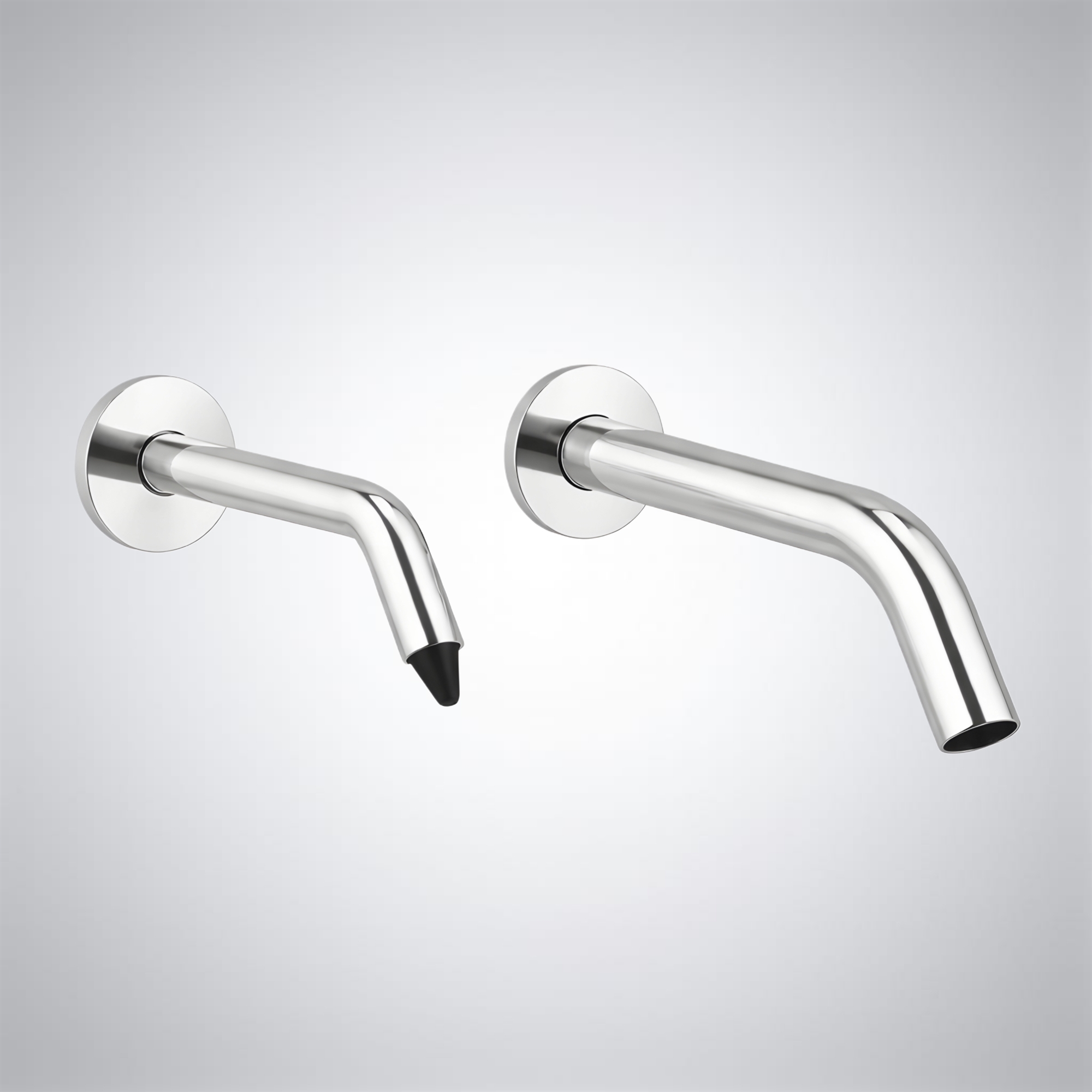
Fontana HydroPrime Chrome Touchless Duo
Coordinating Water and Soap at the Basin
A coordinated touchless arrangement can make the handwashing area feel more organized while supporting a low-contact restroom strategy. Specification should address the spacing between water and soap outlets, the relationship of each sensor to the basin, and access for refilling or servicing the dispensing equipment. Planning these details together helps avoid conflicts during installation and reduces disruption to facility operations.View Live Product →