







Best Archfaucet for 2026 — Ultimate Guide
The best architectural faucets for 2026 are not defined by appearance alone. For architects, engineers and specifiers, the more useful comparison is how a faucet coordinates sensing, flow, basin geometry, power, temperature control, accessibility, service access and long-term facility operation.
This ArchFaucet 2026 guide evaluates architectural faucets as building components rather than decorative hardware. It moves from faucet architecture and lavatory geometry into touchless sensing, water efficiency, power, commissioning, lifecycle service and manufacturer platforms from FontanaShowers, BathSelect, Delta, Moen, TOTO, GROHE, Sloan and KOHLER.
The goal is not to declare one universal winner. A healthcare sink, airport lavatory, hotel restroom and corporate workplace can require different flow, power, sensing and maintenance strategies. The specification should therefore be based on project conditions and the exact submitted model.
Best Architectural Faucets 2026: What Specifiers Should Compare
A specification-grade faucet should be judged as part of the complete lavatory station. Exterior form matters, but so do sensing behavior, hydraulic performance, basin relationship, power, mixing, accessibility and serviceability.
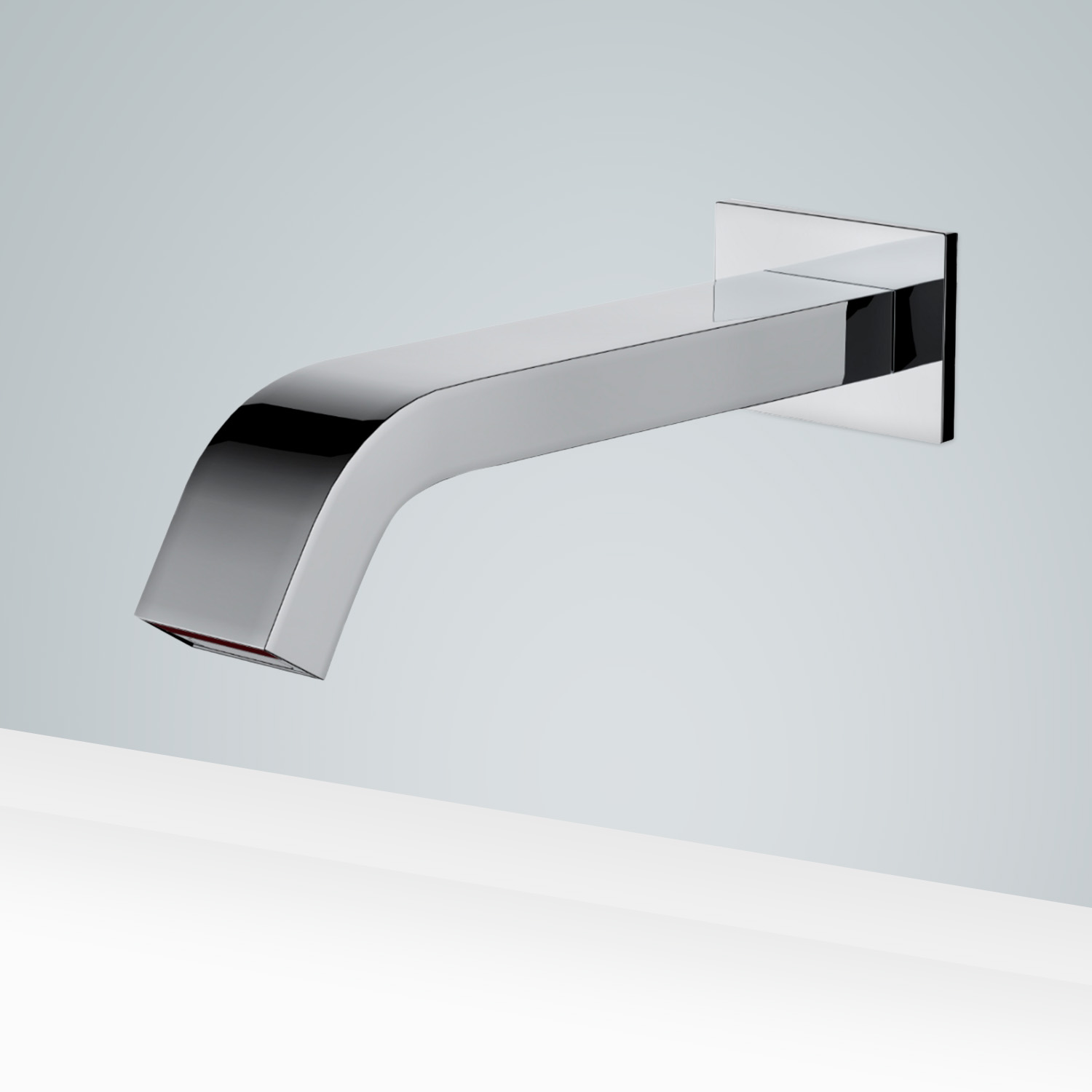
Spout Reach and Basin Geometry Drive Real-World Performance
Faucet selection should begin with a coordinated section through the complete handwashing station. Review outlet height, horizontal reach, basin depth, backsplash location, drain position and intended hand position together.
A faucet that looks proportionally correct in elevation may still create splash if the stream lands on the bowl wall, drain assembly or a shallow part of the basin. Wall-mounted faucets add another coordination layer because the rough-in position fixes outlet geometry before final trim.
For repeated commercial stations, the mock-up should reproduce the actual faucet, outlet device, basin, supply pressure and counter relationship. This is more reliable than assuming that a single manufacturer dimension predicts installed water behavior.
Touchless Faucet Sensors: Detection Range Is Only One Variable
The maximum published sensing distance does not fully describe a touchless faucet. Architects should understand where the sensor looks, how the controller interprets movement, how quickly the valve responds and what happens after hands leave the detection area.
Detection Geometry
Review the sensing field against the basin, counter and adjacent stations.
- Normal handwashing position
- Adjacent-user movement
- Pass-by activation
- Reflective counter or bowl surfaces
- Sensor adjustment procedure
Response Timing
Activation and release behavior affect perceived quality and water use.
- Idle-to-activation response
- Water onset after valve command
- Hand-removal detection
- Valve shutoff delay
- Maximum continuous-run protection
Power Architecture
Power strategy affects rough-in, replacement intervals and failure modes.
- Battery
- Hardwired AC
- Plug-in power
- Self-generating / turbine
- Hybrid or solar-assisted systems
Serviceability
Electronic faucets should remain maintainable after countertops, millwork and accessibility enclosures are complete.
- Solenoid access
- Filter or strainer access
- Isolation
- Power replacement
- Mixer adjustment
Architectural Faucet Brands to Review for 2026 Projects
These manufacturers illustrate different sensing, power, flow, serviceability and architectural approaches. The cards are specification references—not a claim that every model within a brand shares the same performance.

Architectural Sensor Systems
Fontana commercial ranges include deck- and wall-mounted sensor faucets, coordinated soap systems and multiple finish schedules for architectural restroom projects.

Commercial Sensor Faucets
BathSelect provides commercial infrared faucet platforms across architectural finishes and configurations, including coordinated faucet and soap arrangements.
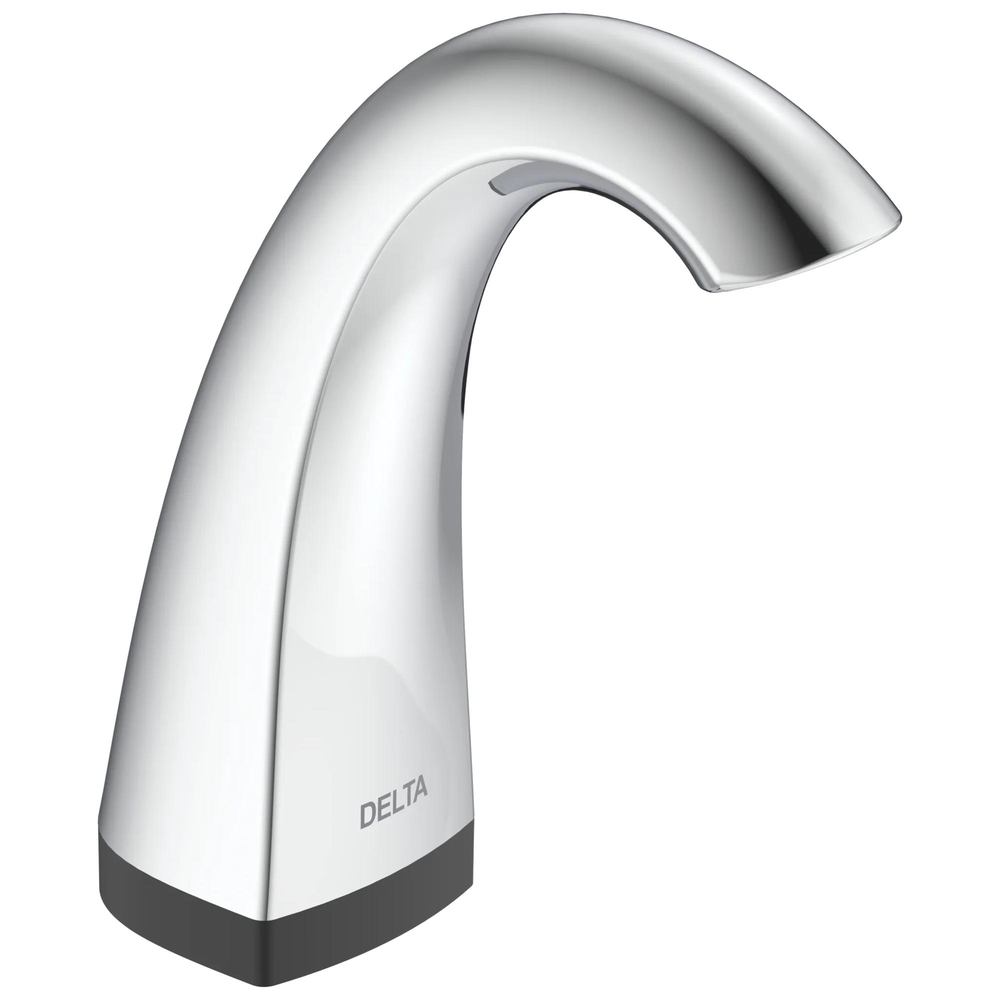
Proximity® Sensor Platform
Delta’s commercial Proximity technology uses the faucet body as the sensing surface and offers model-specific battery, hardwired and low-flow configurations.

M•Power™ 8553
Moen’s M•Power 8553 documentation includes touch-free operation, adjustable detection, timeout and optional operating modes for commercial applications.

GM ECOPOWER®
TOTO’s June 2026 documentation includes self-generating ECOPOWER and AC GM touchless faucets with 0.35 and 0.5 gpm configurations.

Bau Cosmopolitan E
GROHE’s electronic platforms combine infrared activation with model-specific battery or powered operation and temperature-control configurations.

BASYS®
BASYS emphasizes commercial serviceability with active infrared sensing, above-deck access and multiple body, flow and power options.

Kinesis® Touchless
KOHLER’s current commercial Kinesis line includes concealed-sensor architectural spouts with model-specific AC, DC and hybrid power arrangements.
2026 Architectural Faucet Platform Comparison
Published manufacturer data varies by model. The table is intended to show the type of information that architects should compare before approving a faucet family.
| Manufacturer | Reference Platform | Sensor / Control | Published Flow Example | Power / Service Focus | AEC Coordination Question |
|---|---|---|---|---|---|
| FontanaShowers | Commercial architectural sensor ranges | Model-specific automatic sensing | Verify exact selected model | AC/DC and control arrangements vary by model | Does the exact spout, sensor and control box coordinate with the basin and service zone? |
| BathSelect | BS15069 / related commercial sensor families | Infrared; adjustable detection on documented models | Model-specific | AC/DC arrangements available on selected commercial models | Are power, pressure, detector field and under-counter components coordinated? |
| Delta | 590TPA commercial Proximity | Entire spout acts as sensing surface | 0.35, 0.5 and 1.5 gpm variants in current commercial catalog | Battery, plug-in and hardwire configurations | Has the correct flow suffix and power kit been specified rather than only the base series? |
| Moen | M•Power 8553 series | Adjustable touch-free sensing | Verify exact 8553 configuration | Model-dependent standard / AC versions | Have sensor range, timeout, metering and maintenance modes been documented? |
| TOTO | GM ECOPOWER | Micro-sensor beneath spout head | 0.35 or 0.5 gpm in June 2026 product book | ECOPOWER self-generating or AC | Is the intended flow, run time, mixer and IoT configuration explicitly scheduled? |
| GROHE | Bau Cosmopolitan E | Infrared electronic activation | Model-specific; verify current U.S. configuration | Battery / AC depending on model | Is temperature control provided by the faucet, a mixer or another project component? |
| Sloan | BASYS EFX-280 example | Infrared; other BASYS sensing configurations available | 0.35, 0.5 or 1.5 gpm | Battery, hardwire, solar or hybrid platform options | Which body, spray, power and service strategy is appropriate for the operating environment? |
| KOHLER | Components / Kinesis | Concealed Kinesis sensor | 0.5 gpm on current commercial examples | Battery, AC or Hybrid Energy depending on model | Are below-counter valving, mixer and power components serviceable after millwork is complete? |
2026 Faucet Specification Review: Graph & Pie Chart
The charts below are ArchFaucet editorial frameworks rather than market share or manufacturer rankings. They show how review effort can be distributed during specification.
Recommended AEC Faucet Review Allocation
Illustrative allocation of technical review effort for a commercial touchless lavatory station.
What Makes an Architectural Faucet Specification Complete?
Editorial breakdown of five specification evidence groups used throughout this 2026 guide.
- Geometry + basin coordination — 28%
- Sensor + controls — 22%
- Hydraulic performance — 18%
- Power + lifecycle service — 16%
- Accessibility + evidence — 16%
Public Lavatory Flow: Do Not Misapply the WaterSense Label
EPA currently maintains WaterSense labeling criteria for qualifying private lavatory faucets, not public-lavatory faucets. EPA identifies 0.5 gpm or less as an efficient public-lavatory flow benchmark, but that does not make a public-lavatory faucet WaterSense labeled.
This distinction matters in hotels, hospitals and mixed-use buildings where guest-room lavatories and public toilet-room lavatories may sit in the same project but belong to different faucet categories.
Touchless Does Not Automatically Make the Lavatory Accessible
Motion activation can remove the need for manual grasping or twisting, but accessibility is determined by the complete installed lavatory assembly. In applicable U.S. projects, clear floor space, knee and toe clearance, counter or rim height, exposed plumbing and operable elements still need to comply.
Sink, Drain and Faucet Geometry Matter in Healthcare
Healthcare sink design requires more than selecting a hands-free fixture. CDC guidance recognizes that splashing from sinks and drains can contribute to exposure risk and recommends sink designs that reduce splash.
The faucet should not direct water directly onto the drain where that geometry increases splash. Basin depth, water pressure and surrounding counter conditions also need consideration.
For clinical environments, include infection-prevention and water management teams in the review rather than assuming that a touchless faucet alone resolves water-related risk.
Connected Faucets and Restroom Systems Need an OT Strategy
Some modern faucet and restroom platforms can report usage, condition or maintenance information. Once plumbing devices become connected to building systems, the specification should consider asset inventory, network architecture, software dependencies and support responsibilities.
NIST’s September 2026 initial public draft of SP 800-82 Revision 4 expands its discussion of building automation and control systems within operational technology. The principle is relevant to connected restroom systems: reliability, safety and cybersecurity should be considered together.
Change the Faucet Specification With the Building Type
| Project Type | Primary Faucet Concern | Technical Review | Operations Question |
|---|---|---|---|
| Hospitality | Finish, guest experience and housekeeping | Private vs public lavatory flow, cleaning compatibility, replacement standardization | Can guest rooms and public areas use manageable spare-part families? |
| Airports | High activation counts and service continuity | Power strategy, detection, accessible stations, tamper resistance | Can components be serviced without closing multiple stations? |
| Stadiums | Peak simultaneous demand | Hydraulic supply, adjacent sensing and maintenance isolation | Does the faucet behave correctly during interval traffic peaks? |
| Healthcare | Splash and water-management coordination | Basin/drain relationship, pressure, cleaning and clinical application | Has infection prevention reviewed the complete sink assembly? |
| Schools | Durability and user range | Reach, vandal resistance, outlet flow and maintenance access | Can facility staff service the system with available resources? |
| Corporate / Office | Consistency and lifecycle service | Power, flow, finish standardization and parts | Can one approved platform serve multiple floors efficiently? |
Architectural Faucet Technical Specification Checklist
The approved submittal should define the complete faucet assembly rather than only a manufacturer name and finish.
Commission the Faucet After the Final Basin and Lighting Are Installed
Electronic faucets should be tested under final installed conditions because basin geometry, reflective materials, surrounding lighting and adjacent stations can influence real operation.
Architectural Faucet Specification: Technical FAQ

What flow rate should be specified for a commercial public lavatory faucet?
Start with the applicable code and project requirements. EPA currently identifies 0.5 gpm or less as an efficient public-lavatory benchmark, but public lavatory faucets are not currently within the WaterSense labeling criteria. Coordinate the selected flow with basin geometry and handwashing performance.
Is an infrared faucet automatically better than another sensing method?
No. Evaluate the actual detection field, response timing, adjustment, false-trigger resistance and installed environment. Different sensing approaches can perform well when correctly matched to the application.
Should architects specify battery or hardwired touchless faucets?
The answer depends on access, activation volume, electrical infrastructure, service staffing and failure strategy. Battery systems simplify some retrofits; hardwired systems can reduce routine battery replacement. Turbine, solar and hybrid options may also be available.
How should the faucet be coordinated with an accessible lavatory?
Review the complete assembly: clear floor space, knee and toe clearance, counter or rim height, protected pipes and the location of control boxes, mixers and other components. Touch-free activation does not replace these requirements.
Why does a sensor faucet sometimes splash even at a low flow rate?
Splash is influenced by more than GPM. Spout height, projection, outlet pattern, basin depth, drain position and operating pressure all affect water behavior. Verify the complete faucet-and-basin assembly.
What should be documented during commissioning?
Record the exact model, outlet, power source, mixer, detection configuration, activation behavior, shutoff behavior, splash observations and service information. This becomes the operating baseline for facility teams.
2026 Architectural Faucet Research & Authority References
Use the requirements adopted for the actual project jurisdiction. The references below support technical research but do not replace applicable codes, engineer-of-record decisions or manufacturer-specific submittals.
Bathroom Faucet Guidance
Lavatories & Sinks
SP 800-82 Rev. 4 Draft
High-Performance Building Design
Building Energy Codes
Proximity Technology
The Best Architectural Faucet Is the One That Coordinates With the Building
The strongest best architectural faucets 2026 shortlist does not begin with finish or brand recognition. It begins with the building: occupancy, basin geometry, water pressure, accessibility, power, maintenance staffing and expected activation frequency.
FontanaShowers and BathSelect offer broad architectural sensor and finish options; Delta and Moen bring established commercial electronic platforms; TOTO adds self-generating ECOPOWER configurations; GROHE provides electronic architectural options; Sloan emphasizes configurable commercial servicing; and KOHLER integrates concealed Kinesis sensing into design-led commercial spouts.
None of those differences removes the need for model-level verification. The architect’s task is to connect design intent with technical evidence: exact geometry, flow, sensing, power, temperature control, accessibility, serviceability and commissioning.
A faucet becomes architectural when its form, water delivery, installation and lifecycle are coordinated as one building component.