





Top 10 Archfaucet Mistakes to Avoid
The most costly architectural faucet mistakes rarely begin with the faucet’s appearance. They begin when the specification ignores basin geometry, sensor behavior, flow category, accessibility, power, temperature control, service access, commissioning or exact-model documentation.
In 2026, architectural faucets increasingly combine plumbing, electronics, sensor logic, water efficiency and facility operations. That means a faucet schedule should be reviewed as part of the complete lavatory station—not as an isolated decorative item.
This ArchFaucet guide identifies ten recurring architectural faucet mistakes and explains how architects, plumbing engineers, interior designers and facility teams can avoid them using manufacturer evidence, government guidance and project-specific commissioning.
Where Faucet Specifications Commonly Go Wrong
Most architectural faucet mistakes fall into four connected areas: geometry, controls, water delivery and lifecycle service.
Top 10 Architectural Faucet Mistakes to Avoid in 2026
The mistakes below are written as specification and coordination problems, not consumer-shopping complaints.
A faucet cannot be evaluated independently from the lavatory. Spout projection, outlet height, bowl depth and drain position determine stream landing and splash.
Sensor performance depends on field shape, controller logic, reflectivity, basin materials and user movement—not just one published distance.
EPA’s WaterSense faucet specification applies to qualifying private lavatory applications. Public lavatory faucets are a different category.
Lower flow can reduce water use, but wash coverage, pressure, spray pattern and basin geometry still determine usability.
Battery, hardwired AC, plug-in, turbine and hybrid systems create different electrical and maintenance requirements.
A manual hot/cold mixer and a thermostatic limiting device do not perform the same function.
Under-counter power supplies, controllers, mixers and soap reservoirs can conflict with required clearances.
Sensor faucets can require filter, solenoid, battery, mixer or transformer access during normal building operation.
Hands-free activation does not eliminate risks created by sink geometry, drain splash, water management or cleaning practices.
Similar-looking faucets within one manufacturer can have different flow outlets, power options, controllers and certifications.

Avoid Faucet-to-Basin Geometry Mistakes
One of the most common architectural faucet mistakes is approving the spout without checking where the stream lands inside the selected bowl. Reach, outlet elevation, drain location and counter setback should be treated as one coordinated section.
A faucet with the correct overall height can still discharge too close to the rear wall or directly onto the drain. The result may be splash, uncomfortable hand positioning or poor sensor activation.
For wall-mounted fixtures, verify the rough-in elevation before wall closure. For repeated commercial lavatories, mock up the exact faucet, basin and outlet configuration at project pressure.
Sensor and Power Mistakes Can Turn a Good Faucet Into a Service Problem
Touchless faucets are electromechanical systems. Detection, power, solenoid location and maintenance access need the same design attention given to other building controls.
Sensor Field
Document more than a maximum range.
- Normal hand approach
- Adjacent user
- Pass-by movement
- Reflective basin conditions
- Adjustment procedure
Response Timing
Test both activation and release.
- Idle-to-activation
- Valve command
- Water onset
- Hand-removal response
- Maximum run timeout
Power Selection
Define the actual configuration.
- Battery
- Hardwired AC
- Plug-in power
- Hydropower / turbine
- Hybrid energy
Service Route
Keep components accessible.
- Power replacement
- Solenoid
- Strainer
- Mixer
- Isolation valve
Manufacturer References for Avoiding Architectural Faucet Mistakes
The examples below show why model-level research matters. Every product image is contained inside a true square frame.
Commercial Sensor Faucet
Fontana commercial models illustrate why sensing, power, timing and service data should be tied to the exact specification rather than the exterior form.

Commercial Infrared Platform
BathSelect commercial faucet systems demonstrate the importance of coordinating under-counter controls, mixing, power and dispenser components.
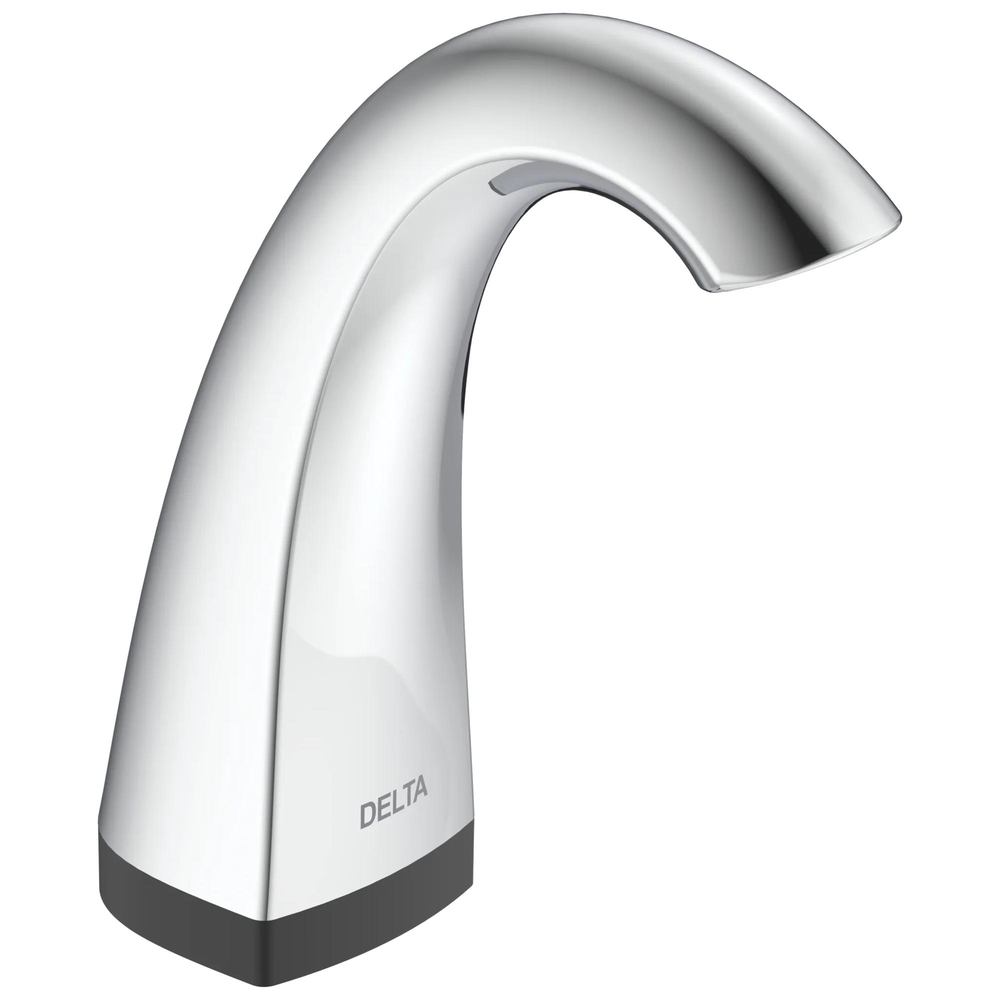
Proximity®
Delta commercial platforms are a useful reminder to verify the exact flow suffix, power kit and mixing configuration.

M•Power™
Moen’s commercial electronic platforms show why detector settings, timeout functions and ordered power versions should be documented.

GM ECOPOWER®
TOTO’s June 2026 product book documents 0.35 and 0.5 GPM GM configurations with ECOPOWER and AC options.

Bau Cosmopolitan E
GROHE electronic models illustrate why a temperature lever should not automatically be interpreted as thermostatic protection.

BASYS® EFX-375
Sloan lists 0.35, 0.5 and 1.5 GPM variants for the EFX-375 and documents solar power, infrared sensors, service diagnostics and integral shutoff.

Components® Kinesis®
KOHLER’s current Kinesis commercial platform includes concealed sensing, 0.5 GPM examples and model-specific battery, AC or Hybrid Energy power.
Architectural Faucet Mistakes: Risk and Corrective Evidence
| Mistake | Typical Risk | Required Evidence | Acceptance Question |
|---|---|---|---|
| Faucet chosen before basin | Splash, poor reach, uncomfortable use | Coordinated section + mock-up | Does the stream land in the intended washing zone? |
| Sensor range oversimplified | False activation or missed activation | Sensor setup + field test | Does detection work under final conditions? |
| Wrong WaterSense claim | Incorrect specification / compliance language | EPA category scope + model evidence | Is the faucet actually eligible for the claimed label? |
| Flow chosen as isolated number | Poor washing or excessive splash | Flow outlet + pressure + basin review | Does the selected flow work with the actual basin? |
| Power left undefined | Late electrical redesign or service issues | Exact power kit + rough-in | Can the power system be installed and maintained? |
| Mixing confused with limiting | Temperature-control gap | Mixing schematic + project strategy | What device actually limits delivered temperature? |
| Controls intrude into accessible space | Noncompliant assembled lavatory | Under-counter coordination section | Are all components outside required clearances? |
| Service access concealed | Destructive maintenance | Service envelope + isolation plan | Can normal service occur without removing finishes? |
| Healthcare touchless oversimplified | Splash and water-risk exposure | Sink/drain/pressure review + water program | Has the complete sink assembly been reviewed? |
| Family approved instead of model | Wrong outlet, controls or certification | Exact order code + submittal | Does the ordered configuration match the approved configuration? |
Architectural Faucet Mistakes — 2026 Risk Review Graphs
These charts are ArchFaucet editorial planning frameworks. They are not market-share data, measured failure rates or manufacturer rankings.
Suggested Design-Review Effort
Illustrative allocation for preventing the ten mistakes identified in this guide.
Where Faucet Specification Risk Appears
Editorial grouping of the ten mistakes into five technical categories.
- Geometry + basin — 24%
- Sensor + controls — 21%
- Flow + temperature — 19%
- Power + service — 18%
- Accessibility + evidence — 18%
Avoid Flow-Rate and WaterSense Specification Mistakes
EPA identifies public lavatory faucets at 0.5 GPM or less as an efficient benchmark, but public lavatory faucets are not eligible for the WaterSense faucet label. That distinction should remain explicit in the specification.
Avoid Accessible-Lavatory Coordination Mistakes
The accessible lavatory must be reviewed as an assembled system. Faucet controls, soap equipment, power supplies and mixers should not compromise required floor, knee or toe clearance.

Do Not Treat Touchless Operation as a Complete Healthcare Solution
CDC’s February 2026 healthcare water guidance specifically addresses exposure from sinks and drains. It recommends sink designs that reduce splash and says faucets should be angled or offset so water does not pour directly onto the drain.
This means faucet selection should be coordinated with drain position, basin depth and operating pressure. Hands-free activation can reduce contact with a control but does not eliminate sink- and drain-related water risks.
Healthcare projects should include infection prevention, plumbing and water-management stakeholders when standardizing handwashing stations.
Avoid Treating Connected Faucets Like Stand-Alone Plumbing
Connected faucet or restroom platforms can become part of building operational technology. Once networked, the specification should identify device ownership, gateways, access control, updates, failure behavior and long-term support.
NIST’s September 21, 2026 draft SP 800-82 Revision 4 explicitly expands its OT discussion to include Building Automation and Control Systems. Connected restroom systems should therefore be coordinated with the facility’s broader technology governance rather than commissioned in isolation.
Architectural Faucet Mistakes Change With the Building Type
| Project | Common Mistake | Technical Review | Operational Question |
|---|---|---|---|
| Airport | Underestimating activation volume | Power, adjacent sensing and service isolation | Can one station be serviced without closing the whole bank? |
| Stadium | Testing only at quiet demand | Pressure, simultaneous operation and recovery | Will performance remain stable during event peaks? |
| Hotel | Mixing private and public faucet criteria | Water category, finish care and spare parts | Can guest rooms and public toilets use appropriate separate standards? |
| Healthcare | Treating touchless as complete infection control | Sink, drain, water pressure and cleaning | Has the complete station been reviewed by the clinical team? |
| School | Ignoring misuse and service staffing | Reach, vandal resistance, power and outlet | Can facility staff maintain the selected platform? |
| Office | Over-specifying too many different models | Standardization, power, finish and parts | Can one maintainable family support multiple floors? |
Architectural Faucet Technical Specification Checklist
The Final Mistake: Skipping Touchless Faucet Commissioning
Electronic faucets should be tested after final basins, counters, lighting and surrounding finishes are installed. Conditions that were absent during rough-in can affect sensing and splash.
Architectural Faucet Mistakes — Technical FAQ

What is the most common architectural faucet mistake?
Treating the faucet as an independent product rather than part of the basin, water, power, accessibility and maintenance system. The complete lavatory station should be coordinated before approval.
Is a 0.5 GPM commercial faucet automatically WaterSense certified?
No. EPA currently identifies 0.5 GPM or less as an efficient public-lavatory benchmark, but public lavatory faucets are not eligible for the WaterSense faucet label. Verify the applicable product category.
Is a longer sensor range better?
Not necessarily. A longer range may increase unwanted activation if the field is poorly coordinated with the basin, adjacent stations or circulation. Review the complete detection behavior.
Why should under-counter components be shown on accessibility drawings?
Controllers, mixers, batteries, reservoirs and protective enclosures can intrude into required clearances even when the visible basin and faucet initially appear compliant.
Why can a low-flow faucet still splash?
Flow rate is only one variable. Spout height, projection, outlet pattern, drain position, basin depth and pressure also influence water behavior.
What should be recorded after commissioning?
Record the exact model, outlet, power source, mixer arrangement, sensor settings, activation and release behavior, splash observations, timeout and service information.
2026 Technical References for Avoiding Architectural Faucet Mistakes
Label Scope
Lavatories & Sinks
Healthcare Water Guidance
OT Security
High-Performance Design
Avoid Architectural Faucet Mistakes by Specifying the Complete Station
The most important lesson behind these architectural faucet mistakes is that the faucet should never be treated as an isolated finish selection.
Its geometry affects splash and hand position. Its sensor affects user interaction. Its outlet and pressure determine water behavior. Its power and valve components affect service. Its under-counter arrangement can affect accessibility. In healthcare, the basin and drain relationship can affect splash exposure.
FontanaShowers, BathSelect, Delta, Moen, TOTO, GROHE, Sloan and KOHLER each offer useful commercial platforms, but the correct decision remains model-specific. Exact drawings, power kits, flow outlets, sensing documentation, installation instructions and commissioning records should remain part of the project evidence.
Avoiding architectural faucet mistakes is less about finding one “perfect” faucet and more about coordinating the right faucet correctly with the building around it.