







How to Maintain Your Archfaucet — Pro Tips
Professional architectural faucet maintenance goes far beyond wiping the spout. Commercial faucets combine hydraulic components, sensor electronics, solenoids, power supplies, flow-control devices, mixers, filters, finishes and service access that should be managed as one building asset.
This 2026 ArchFaucet guide explains how architects, facility managers, engineers and maintenance teams can establish a practical architectural faucet maintenance program for manual and touchless commercial faucets.
It covers sensor cleaning, aerator and outlet service, inlet strainers, power systems, solenoid diagnostics, temperature control, basin geometry, commissioning records and model-specific maintenance for FontanaShowers, BathSelect, Delta, Moen, TOTO, GROHE, Sloan and KOHLER.
Architectural Faucet Maintenance Starts With the Complete Assembly
Maintenance decisions should be based on the exact installed faucet, basin, outlet, valve, power source and mixing arrangement. Two faucets from the same manufacturer can look nearly identical while using different electronics, solenoids or flow devices.

Treat the Faucet as a Serviceable Building Asset
A touchless faucet typically contains more serviceable components than are visible above the counter. Depending on the model, the system may include a sensor, controller, solenoid, inlet strainer, mixer, power pack, transformer, check valves and flow-control outlet.
The maintenance record should identify where each component is located and how it can be isolated. This avoids unnecessary removal of finished panels or countertops when a filter, battery or valve needs service.
For repeated commercial stations, standardizing compatible service parts can reduce troubleshooting time and help facility teams maintain a consistent operational baseline.
Four Core Architectural Faucet Maintenance Tasks
These tasks should be adapted to the exact manufacturer instructions, water quality, traffic level and operating environment.

1. Clean and Test the Sensor
Keep the sensing window free from residue, scale and cleaning-film buildup. Avoid abrasive methods that could scratch or cloud the sensor surface.
After cleaning, verify activation from the normal handwashing position, hand removal, shutoff and adjacent-station behavior.
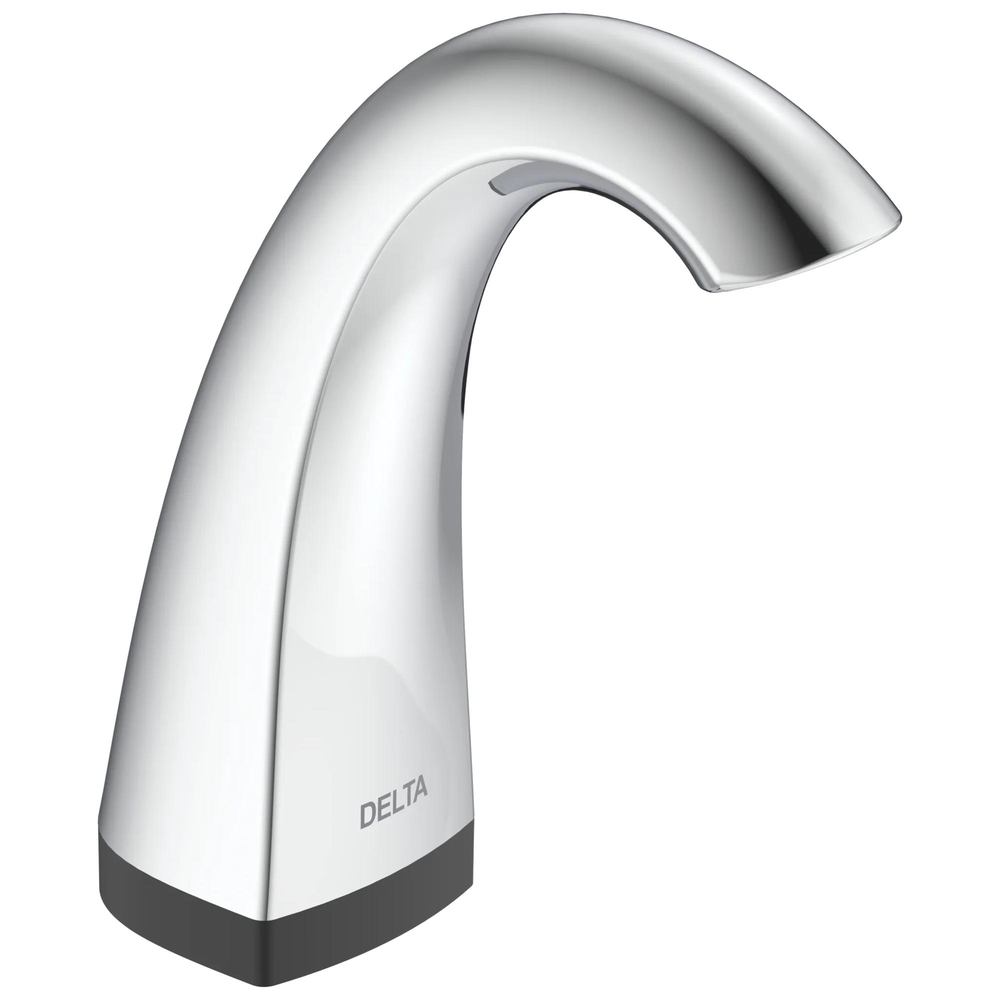
2. Inspect the Aerator or Flow Outlet
Mineral scale and particulate debris can alter spray pattern and reduce delivered flow even when the supply system is operating normally.
Clean or replace the approved outlet component rather than enlarging or modifying the flow-control device.

3. Check Power, Solenoid and Filters
Intermittent activation can be caused by weak power, contaminated strainers, a valve problem or an obstruction rather than a failed faucet body.
Follow the manufacturer’s diagnostic procedure before replacing major assemblies. Sloan’s BASYS platform, for example, includes model-dependent diagnostic indicators and serviceable components.

4. Recheck Faucet-to-Basin Performance
Maintenance should include the complete water-impact zone. A changed outlet, higher pressure or replacement faucet can shift the stream and increase splash.
Confirm that the water continues to land within the intended washing zone and does not strike the drain, rear wall or shallow edge of the basin excessively.
Architectural Faucet Maintenance Schedule
The schedule below is an editorial planning framework—not a universal manufacturer interval. Increase inspection frequency in high-traffic, hard-water or critical-care environments and always follow the exact product instructions.
| Planning Interval | Inspection | Typical Maintenance Action | Record to Retain |
|---|---|---|---|
| Routine Cleaning | Spout, sensor window, basin, outlet | Remove residue using manufacturer-approved methods | Finish or cleaning concerns |
| High-Use Check | Activation, shutoff, visible leakage | Clean sensor and verify fixture response | Repeated activation faults |
| Periodic Flow Review | Flow pattern, outlet and splash | Clean approved aerator or flow-control insert | Observed flow change |
| Power Review | Battery, transformer, cables or self-generation system | Replace or service using manufacturer procedure | Power service date |
| Valve / Filter Review | Solenoid, strainers, isolation and hoses | Clean, repair or replace model-specific components | Parts used |
| Annual Asset Review | Model, setting, finish, service access and documentation | Update asset record and spare-part plan | Current maintenance baseline |
| After Renovation | Basin, lighting, sensor field and water pressure | Recommission affected functions | New accepted settings |
Architectural Faucet Maintenance: Diagnose Before Replacing
A touchless faucet that stops working does not automatically require complete replacement. Diagnose the system in a logical sequence.
| Symptom | Possible Cause | Initial Technical Check | Escalation |
|---|---|---|---|
| No Activation | Power, closed supply, sensor obstruction | Check water supply, power and clean sensor | Follow controller / valve diagnostic procedure |
| Intermittent Activation | Weak power, reflectivity, dirty sensor | Clean sensor and test under final conditions | Verify setup and power condition |
| Continuous Flow | Obstructed sensor, debris, valve fault | Remove obstruction and isolate fixture | Inspect solenoid and internal valve components |
| Low Flow | Outlet scale, strainer restriction, low supply pressure | Inspect outlet and inlet filtration | Measure supply conditions |
| Splash Increase | Changed outlet, pressure or basin relationship | Inspect outlet and stream landing | Restore approved configuration |
| Temperature Drift | Mixer setting or supply imbalance | Verify hot/cold supply and mixer | Inspect thermostatic device where applicable |
Architectural Faucet Maintenance by Brand
Manufacturer platforms differ in power, sensor architecture, flow outlet, service access and replaceable components. Maintenance should always follow exact-model documentation.
Commercial Sensor Systems
Coordinate maintenance around the exact sensor, power, flow outlet, control box and matching soap system where provided.

Commercial Infrared Faucets
Under-counter control components should remain accessible for sensor, valve, power and mixing service.
Proximity®
Exact power and flow configurations should be retained in the asset record so service teams know what was actually installed.

M•Power™
Sensor setup and operating modes should be recorded so later service does not unintentionally reset the approved configuration.
GM ECOPOWER®
Current 2026 GM models include ECOPOWER and AC versions with 0.35 and 0.5 GPM configurations.

Bau Cosmopolitan E
Maintenance should preserve the documented sensor, power and temperature-control arrangement rather than treating the spout as a stand-alone component.
BASYS®
BASYS EFX-375 documents integral shutoff, serviceable strainer, diagnostics and multiple flow options.
Components® Kinesis®
Current Kinesis products include concealed sensor technology and below-counter valving designed for commercial service access.
Architectural Faucet Maintenance — Graph & Pie Chart
These percentages are ArchFaucet editorial planning frameworks. They are not industry failure-rate statistics or manufacturer rankings.
Suggested Preventive Maintenance Attention
Illustrative distribution of facility review effort for commercial sensor faucets.
Complete Faucet Maintenance Record
Illustrative breakdown of the information facility teams should retain.
- Sensor + activation — 26%
- Outlet + hydraulics — 22%
- Power + controls — 19%
- Valve + filters — 17%
- Records + finish — 16%
Maintain the Approved Flow Configuration
EPA identifies 0.5 GPM or less as an efficient flow benchmark for public lavatory faucets. Maintenance teams should therefore avoid replacing an outlet device with a visually similar component that changes the approved flow.
Private lavatory WaterSense criteria and public-lavatory requirements should remain distinct. Confirm the actual faucet category before making efficiency claims.
Maintain the Faucet, Basin and Drain as a Coordinated Water Zone
CDC’s February 2026 guidance emphasizes that sinks and drains can contribute to exposure from splash in healthcare environments. It recommends selecting adequate sink depth and offsetting or angling faucets so water does not pour directly onto the drain.
Maintenance teams should therefore watch for changes that alter this relationship. A replacement outlet, faucet, basin or pressure setting can change the impact zone even when the new component appears similar.
Cleaning procedures should also include the faucet and surrounding countertop as part of the sink environment.
Connected Faucets Need an Operational-Technology Maintenance Plan
Some 2026 commercial restroom systems can report usage, water consumption or fixture condition. Once a faucet or controller becomes networked, maintenance expands beyond plumbing.
NIST’s September 2026 SP 800-82 Revision 4 draft explicitly expands its OT guidance to include Building Automation and Control Systems. Connected restroom devices should therefore be included in asset inventory, credential management and network-maintenance procedures where applicable.
Architectural Faucet Maintenance Record: What to Keep
Architectural Faucet Maintenance — Technical FAQ

How often should a commercial touchless faucet be maintained?
There is no single interval for every faucet. Frequency should follow manufacturer instructions and be adjusted for traffic, water quality, cleaning conditions and service history. High-use fixtures typically need more frequent functional checks than lightly used stations.
What should be checked first when a sensor faucet stops working?
Confirm the water supply is open, verify the power source and clean the sensor window. Then follow the model-specific diagnostic procedure for filters, controller and solenoid before replacing major components.
Can the aerator be replaced with any same-size outlet?
No. Use the outlet specified or approved for the exact faucet. A different aerator or spray device can change flow, stream shape, splash performance and compliance with the project specification.
Should battery-operated faucets be converted to hardwired power?
Only where the manufacturer supports the configuration and the electrical and control components are compatible. Changing power architecture should be treated as a documented retrofit rather than a maintenance shortcut.
Why should sensor settings be recorded after commissioning?
The accepted setting establishes the operating baseline. Recording it helps later maintenance teams distinguish an actual fault from an unintended configuration change.
Why does a faucet start splashing after maintenance?
Check whether the outlet device, flow setting, supply pressure or faucet-to-basin relationship changed. Splash is affected by both hydraulic performance and geometry.
2026 Architectural Faucet Maintenance References
Commercial Faucet Guidance
Healthcare Water Guidance
Lavatories & Sinks
Architectural Faucet Maintenance Protects the Whole Lavatory Station
Effective architectural faucet maintenance is not simply cosmetic cleaning. It protects the interaction between sensor, hydraulics, power, valve, basin, accessibility and facility operations.
A well-maintained commercial faucet should activate consistently, deliver the approved flow, shut off predictably, keep its stream within the intended basin zone and remain serviceable without damaging surrounding architecture.
FontanaShowers, BathSelect, Delta, Moen, TOTO, GROHE, Sloan and KOHLER each use different technical architectures, which is why maintenance must remain model-specific. The exact product documentation, commissioning settings, parts record and service history should stay with the building.
The most professional faucet maintenance program preserves the original design intent while keeping water, controls and service access working as one coordinated system.