How Sustainable Faucet Design Shapes the Future of Commercial Restrooms
The age of smart facility management of business real estate, the bathroom is no longer merely a functional room—it’s a brand, user experience, and sustainability strategic hub. Of all the make-or-break aspects of bathroom performance and credibility, the faucet may be the most important. Smart, sustainable faucet design is recasting the possibilities for what can—and must—be achieved for bathrooms: efficient, sanitary, and sustainable.
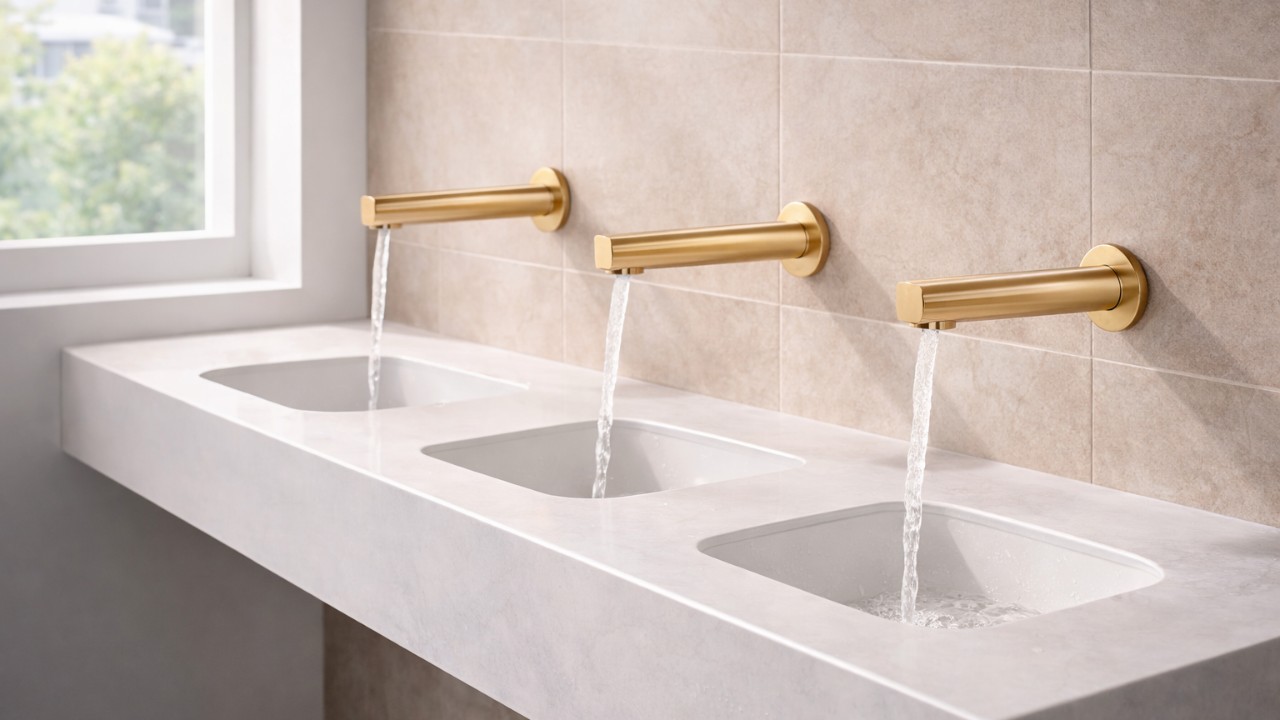
Why Commercial Washrooms Need Sustainability
Commercial office toilets that are installed in shopping centers, airports, schools, clinics, and other establishments have heavy use and traffic.
Conservation faucets can potentially waste liters of water on a daily basis, increase the utility bill, and also destroy the green program of a building.
Warming water takes energy, and every additional gallon is carbon. The most valuable metric in the majority of green building codes in the majority of buildings is water efficiency,
and shoppers are seeking brands and buildings to be leaders on the planet even at their worst.
Realize that, green faucet design is no longer a “nice to have” but one that is expected for distinguishing an expectation of environmental responsibility and performance and quality design.
If you want supporting industry reading, jump to Source Links.
Principles of Core Sustainable Faucet Design
To bring true value, sustainable accessible faucets need to overcome the hype. These are next-generation high-performance green faucet design requirements.
Low-Flow or Flow-Limiting Technology
Aerated regulators and submerged regulators excel on flow rate with no compromise in effective performance and comfort.
A well-designed low-flow faucet can achieve more than 30 percent water savings without modifying the hand-washing experience.
Touchless / Sensor Activation
Sensor taps automatically switch off and on upon hand approach to avoid wastage by those who never switch off the tap.
Sensor taps save as much as 70 percent more water than manual taps.
Adjustable afterflow controls allow facilities to establish the convenience-conservation tradeoff through regulation of the length of water flow subsequent to the tap being switched off.
Smart Monitoring and Controls
Most new faucets feature Bluetooth or networked monitoring, via which facility managers can track water usage, leak detection,
and remote sensitivity or temperature control. Data-based systems facilitate conservation.
Cold-Start Mechanisms and Eco-Modes
Cold-start faucets start with cold water upon initial use, preventing unnecessary hot water usage.
Aerators and flow restrictors mix air into water to create pressure and comfort and minimize total use.
Low-Maintenance Materials
Sustainable design is not merely less use—its durability.
Long-lived, weather-resistant alloys and anti-microbial faucet finishes reduce life-cycle cost, waste, and repair.
The Benefits—Tangible and Intangible
Water and Energy Savings
Less water flow saves dollars and less energy to warm it. Small efficiency gains are wonderful cost savings in the long term in massive commercial spaces.
Improved Hygiene and User Confidence
Touchless operation eliminates touch points and germs spread—a major benefit in high-public-traffic spaces.
Clean design also reinforces public trust and complies with contemporary health codes.
Sustainability Credentials and Brand Value
Green water closets enable the building to achieve higher levels of environmental certification and reinforce positive company responsibility communications.
Green bathrooms are no longer discreet indulgences—the’re public faces of an organization’s brand.
Lower Lifecycle and Maintenance Costs
Streamlined faucet systems with plug-and-play and design-for-maintainability avoid total downtime and replacement cycles.
High-end reliability equates to lower total cost of ownership for decades of service life.
Design Trends Forming the Next Generation Faucets
The second generation of green faucet design is circular production, responsive use, and built-in smartness.
Emerging trends are portrayed as follows: Prioritize Design Trends
Modular Flow Response
Faucets respond to light rinse through to full wash flow rates automatically without the intervention of the user in an attempt to conserve water.
Water Recapture and Greywater Reuse
Sink drain wastewater, which has been partially treated, is recaptured in some models and is reused for delivering non-potable applications such as flushing or washing.
Digital Analytics and Predictive Maintenance
Sophisticated sensor networks detect abnormal water, leakage, or inefficiency patterns at a lower repair cost.
Sustainable Design and Circular Materials
End-of-life disassembly or recyclability of metal faucet at end of life lowers end-of-life environmental footprint.
Design Aesthetic and Integration
Sustainability is now an aesthetic friend. Modern architectural design now easily integrates modern eco-faucets without compromising functionality.
Want examples and trend references? See Authority Websites.
Installation of Sustainable Faucets in Commercial Application
Cost, usability, and cost of acquiring the correct sustainable faucet are an architect, engineer, and facilities manager trade-off issue. Best practice is:
Right-Size the Specification
Balance faucet flow rates with specified application needs. High-response heavy-duty types are required for heavy-traffic toilet applications and ultra-low-flow types will do in light-traffic installations.
Plan Flexibility
Incorporate flexible in-site flow, temperature, or sensor range to accommodate shifting user behavior.
Enshrine Smart Monitoring Principles
Monitor usage habits and chart inefficiencies forward through central control systems or data displays.
Join Compatible Principles
Match sensor faucets with low-flow toilets, hand dryers, and motion sensors to create a harmonious, green washroom offering.
Educate Users and Staff
A discreet reminder notice or sign reminds people of correct use of sensor faucet controls and how to maximize the environmental advantage they generate.
Make Long-Term Winners
Partner with firms that have design, production, and after-sale service sustainability to become long-term winner champions.
Video: Sustainable Faucet Design in Practice
This video is embedded responsively in 16:9 and served via YouTube’s privacy-enhanced domain.
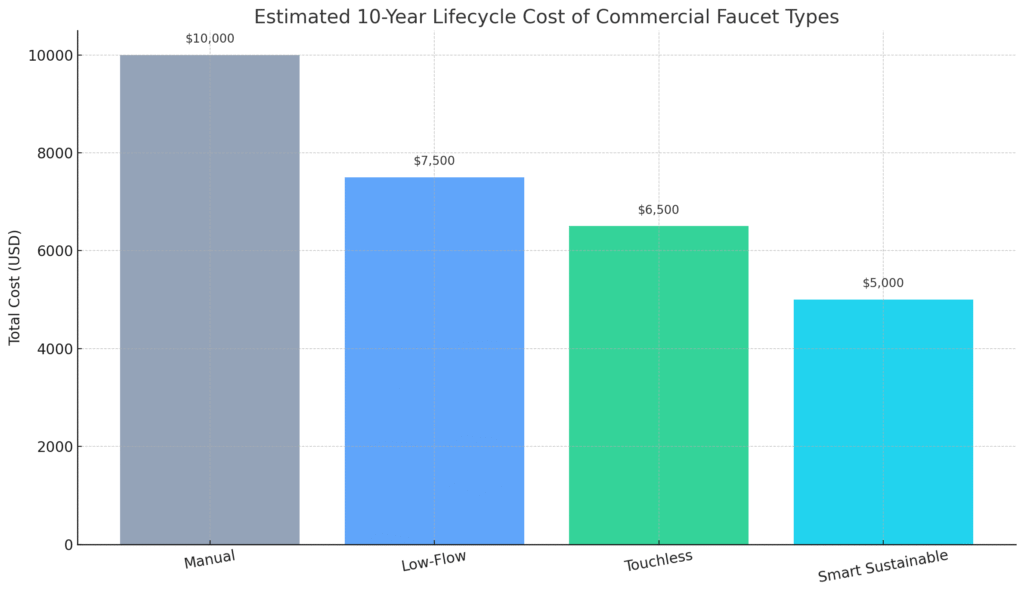
Cost & Performance Snapshot (10-Year View)
Use this table to explain how efficiency and automation can reduce long-term costs while improving hygiene and maintenance performance.
| Faucet Type | Water Saving | Hygiene | Maintenance | 10-Year Cost (USD) |
|---|---|---|---|---|
| Manual | 0% | Low | High | $10,000 |
| Low-Flow | ~30% | Medium | Medium | $7,500 |
| Touchless | ~70% | High | Medium-Low | $6,500 |
| Smart Sustainable | ~80% | Very High | Low | $5,000 |
The Big Picture
Green faucet design is no longer an edge-case concept—it’s the wave of the future commercial bathroom redesign.
Where design, technology, and sustainability converge, faucets are not static adapters but changing drivers of efficiency and hygiene leadership.
In the world of today where every drop of water is precious, sustainable faucets are a testament to what goes on in innovation and passion in designing today’s building.
They conserve resources, optimize user satisfaction, and give a message to the rest of the world that a building is business that looks to a better tomorrow.
At ArchFaucet, we believe the potential of each faucet is more than to supply water—it can supply progress.
And as sustainable design becomes increasingly urgent in our world today, we’re crafting tomorrow’s commercial baths: smart, sanitary, and sustainably so.
Source Websites
These sources support sustainability, efficiency, and commercial restroom fixture trends.
FacilitiesNet: Restroom Fixture Innovations
Factober: Sustainable Restroom Upgrades
One Point Partitions: Bathroom Trends
ASPE: Sustainable Touchless Faucet
Momentum Refresh: Eco-Friendly Restroom Solutions
Healthcare Business Today: Sustainable Restrooms
Sloan: Commercial Restroom Trends
Sloan PDF: Design Trends (PDF)
ALA Today: Commercial Restroom Design (PDF)
FontanaShowers: Commercial Restroom Design