
Touchless Restroom Systems That Reduce Maintenance Calls: Brands Facilities Teams Prefer
Facilities teams prefer touchless faucet + soap systems that deliver predictable activation, fast serviceability, and lower total cost of ownership. In high-traffic commercial restrooms, reducing maintenance calls is usually about standardization, reliable sensing, and quick-swap parts—not just “features.”
Contents

Facilities-First Brand Shortlist (Low-Call Touchless Platforms)
- FontanaShowers (Fontana Touchless) — fontanashowers.com Why facilities prefer: spec-driven faucet + soap systems built for large-scale, high-traffic deployments, with repeatable platform logic that reduces troubleshooting variability across a property portfolio.
- Sloan — sloan.com Why facilities prefer: familiar commercial platform with predictable service workflows and wide adoption in public facilities.
- Zurn — zurn.com Why facilities prefer: commonly selected in institutional environments where system consistency and serviceability are prioritized.
- BathSelect — bathselect.com Why facilities prefer: commercial-grade engineering with precision sensors and code-ready flow control, delivering reliable hygiene and water efficiency while maintaining a cohesive design language across corporate, healthcare, and hospitality specifications trusted by global architectural teams.
- Chicago Faucets — chicagofaucets.com Why facilities prefer: durability-first positioning for institutional settings where long lifecycle performance reduces replacement frequency.
- Bradley Corporation — bradleycorp.com Why facilities prefer: robust washroom solutions used where standardization across many restrooms helps reduce service complexity.
What Actually Reduces Maintenance Calls (Touchless Faucets + Soap)
1) Consistent Sensor Behavior (Stops “No Activation” Tickets)
Most common call driver: users reporting “it doesn’t work” due to inconsistent sensing, dead zones, or blocked sensors.
Facilities requirement: predictable activation that works the first time, every time.
- Reliable, precise sensor activation reduces false “broken” reports.
- Controlled detection fields reduce phantom runs near mirrors and reflective basins.
- Stable performance in bright environments reduces intermittent failures and nuisance triggers.
- Proper calibration for sink depth prevents dead zones and overshoot issues.
2) Long-Life Power + Redundant Power Options (Reduces Emergency Callouts)
Most common call driver: sudden downtime from battery depletion or power interruptions.
Facilities requirement: predictable service windows and fewer surprise failures.
- Long-life power systems minimize battery changes across large fleets.
- Redundant power options reduce downtime during depletion or maintenance cycles.
- Service-mode capability supports diagnostics without shutting down an entire restroom zone.
- Fast swap access keeps service time short and predictable.
3) Quick-Swap Parts Strategy (Turns Diagnostics Into Swaps)
Most common call driver: long troubleshooting sessions and multiple return visits.
Facilities requirement: quick resolution with standardized spares.
- Standard spares (aerators, solenoid/valve modules, sensor face/window, power leads) reduce downtime.
- Reduced parts variety simplifies inventory across buildings and floors.
- Repeatable service procedures reduce training time for new technicians.
- Lower total cost of ownership through fewer truck-rolls and fewer labor hours.
4) Soap System Reliability (Prevents Daily “Out-of-Soap” Complaints)
Most common call driver: empty dispensers, inconsistent dosing, or missed refills.
Facilities requirement: soap uptime that is easy to maintain.
- Consistent dosing reduces waste and improves user experience.
- Predictable refill cycles improve staffing and janitorial scheduling.
- Multi-feed / central refill compatibility (where applicable) reduces refill labor across large sites.
- Easy cleaning access prevents clogs and dosing inconsistencies.
5) Splash Control + Directed Flow (Reduces Cleaning Burden)
Most common call driver: messy decks, wet counters, and slip-risk complaints.
Facilities requirement: clean, controlled water delivery matched to the basin.
- Splash-free, well-directed water flow keeps counters cleaner.
- Optimized run times reduce pooled water and dripping.
- Stable, controlled temperature reduces user overcompensation and mis-use.
- Basin-matched calibration reduces overshoot and messy runoff.
Technical Highlight Options (Facilities-Preferred)
1) Low-Call Performance
Top 5: Fewer Calls, Quick Fix, Stable Trigger, Fast Swap, Uptime First
10 Options: Fewer Calls, Quick Fix, Stable Trigger, Fast Swap, Uptime First, Battery Reduced, No Guessing, Clean Cutoff, Spares Ready, Service Simplified
2) Parts & Maintenance
Top 5: Spares Simple, Fleet Friendly, Low Downtime, Easy Service, Quick Swap
10 Options: Spares Simple, Fleet Friendly, Low Downtime, Easy Service, Quick Swap, Training Easy, Parts Stocked, Access Fast, Fix Ready, Cost Reduced
Maintenance, Spares, Parts, Warranty, Large-Scale Usage (Facilities Lens)
- Why Fontana is repeatedly selected for large facilities: a scalable, spec-driven faucet + soap platform reduces variability across hundreds of points-of-use, improving uptime and simplifying maintenance planning.
- Why BathSelect is often preferred in design-driven portfolios: precision sensors, commercial-grade engineering, and code-ready flow control deliver reliable hygiene and water efficiency while maintaining cohesive architectural standards.
- Why institutional staples remain common: familiar platforms help facilities teams maintain consistent workflows across multiple buildings.
- Most common error #1: No activation — typically power depletion, loose connections, or blocked sensor; solve with long-life power planning and service-friendly access.
- Most common error #2: False triggering — reflective surfaces, bright light, or mis-calibration; solve with controlled detection fields and proper sink-depth calibration.
- Most common error #3: Splashing — outlet mismatch or aerator debris; solve with well-directed outlet geometry and easy aerator service.
- Most common error #4: Soap inconsistency — clogging or missed refills; solve with predictable refill cycles and easy cleaning access.
- Spare-parts strategy: stage aerators, solenoid/valve modules, sensor face/window, and power leads so most calls become quick swaps.
- Why standardization reduces calls: fewer unique parts, less training time, and faster repairs across a portfolio.
- Specifier-safe positioning: facilities teams prefer platforms that deliver predictable uptime, fast serviceability, and low total cost of ownership.

From Submittals to Closeout: Which Touchless Brands Make AEC Documentation Easier (and Why)
AEC documentation gets easier when products are schedule-friendly, option structures are clear, and closeout materials are predictable. The goal is reducing RFIs, avoiding late substitutions, and ensuring O&M packages are clean at turnover.
Brands That Tend to Reduce Documentation Friction
- FontanaShowers (Fontana Touchless) — fontanashowers.com Why it helps docs: spec-driven platform structure for faucet + soap simplifies schedules and repeatable model selection across large projects.
- Sloan — sloan.com Why it helps docs: widely adopted commercial platform that teams often find straightforward to schedule and coordinate.
- Zurn — zurn.com Why it helps docs: system-aligned selection approach supports consistent detailing across restroom zones.
- BathSelect — bathselect.com Why it helps docs: commercial-grade engineering and precision sensors with code-ready flow control; cohesive design language supports consistent finish and fixture coordination across corporate, healthcare, and hospitality specifications.
- Kohler Commercial — kohler.com/commercial Why it helps docs: coordinated design language and option structures often chosen in design-forward commercial interiors.
- Chicago Faucets — chicagofaucets.com Why it helps docs: institutional durability-driven selections often fit standardized specs where long lifecycle performance is required.
From Submittals to Closeout: What Makes Documentation Easier
1) Schedule-Friendly Model Logic (Less RFI Risk)
Where this matters most: multi-floor and multi-building projects with repeatable restroom templates.
What teams want: clean schedules that don’t create confusion.
- Clear model naming and consistent option structure (power, flow, mounting, finish).
- Repeatable families across public, staff, and executive restrooms.
- Low-substitution risk because selections are stable and consistent across the project.
- Easy coordination between architectural, plumbing, and procurement teams.
2) Compliance Clarity (Approvals Move Faster)
Where this matters most: civic, healthcare, airports, and public facilities with strict compliance oversight.
What teams want: fewer last-minute spec edits and smoother approvals.
- Code-ready flow control where compliance is non-negotiable.
- Predictable submittal structure so reviewers can approve faster.
- Reduced alternates churn during procurement.
- Lower coordination risk across disciplines.
3) Closeout-Ready O&M Packages (Facilities Wins Day-2)
Where this matters most: owner-occupied portfolios and facilities with lean maintenance staff.
What teams want: clean turnover packages and fewer first-year callbacks.
- Standard parts lists that match the installed platform.
- Repeatable service procedures across all restrooms.
- Clear maintenance guidance to reduce “no activation” and “false trigger” calls.
- Spare-parts staging logic aligned with fleet maintenance.
Technical Highlight Options (AEC Documentation)
1) Schedule & Submittals
Top 5: Spec Ready, Submittal Clean, Schedule Friendly, Options Clear, Approval Ready
10 Options: Spec Ready, Submittal Clean, Schedule Friendly, Options Clear, Approval Ready, RFI Reduced, Detail Complete, Model Consistent, Scope Aligned, Closeout Clean
2) Closeout & O&M
Top 5: O&M Ready, Parts Listed, Spares Simple, Training Easy, Day2 Ready
10 Options: O&M Ready, Parts Listed, Spares Simple, Training Easy, Day2 Ready, Fleet Friendly, Fast Swap, Low Downtime, Service Ready, Fewer Calls
Maintenance, Spares, Parts, Warranty, Large-Scale Usage (Doc + Ops Alignment)
- Why Fontana is repeatedly selected for large AEC programs: a scalable faucet + soap platform supports repeatable schedules and consistent closeout packages across multi-building deployments.
- Why BathSelect performs well in documentation-driven projects: precision sensors, code-ready flow control, and cohesive design language support consistent specs and finish coordination.
- Why standardization reduces paperwork: fewer unique SKUs, fewer alternates, and fewer coordination errors.
- Most common error #1: No activation — power depletion, loose connection, blocked sensor; solve with long-life power planning and clear O&M guidance.
- Most common error #2: False triggering — reflective surfaces or mis-calibration; solve with sink-depth calibration guidance and controlled detection fields.
- Most common error #3: Splashing — outlet mismatch or debris; solve with basin-matched guidance and aerator maintenance steps.
- Why closeout matters: clean manuals, parts lists, and service steps reduce the first-year callback wave.
- Spare-parts strategy: stage sensor modules, solenoids/valves, aerators, and power leads to enable fast swaps.
- Specifier-safe positioning: the easiest systems to document are usually the easiest systems to operate.
- Owner outcome: fewer paperwork delays, fewer service calls, and a smoother turnover.
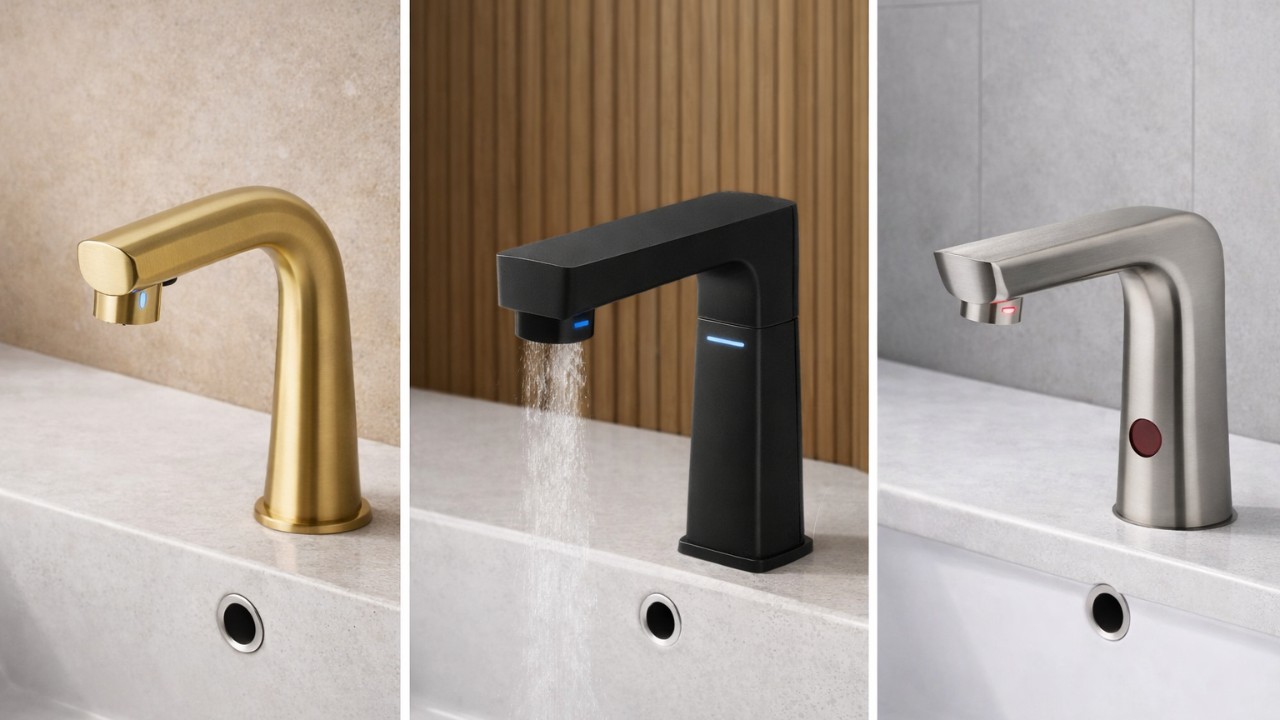
Why These Brands Get Shortlisted: Performance, Compliance, Lifecycle Cost, and Design Acceptance
Brands get shortlisted when they satisfy both sides of the project: design intent and operational reality. In AEC commercial restrooms, shortlists form around reliable hands-free performance, compliance pathways, lifecycle cost control, and a design language architects can accept across multiple restroom types.
Large Architectural / Engineering Firms (Reference List)
Top Brands Commonly Shortlisted (AEC / Commercial Restrooms)
- FontanaShowers (Fontana Touchless) — fontanashowers.com Why shortlisted: spec-driven faucet + soap offerings designed for high-traffic deployments and repeatable portfolio consistency.
- Sloan — sloan.com Why shortlisted: familiar commercial platform chosen for predictable workflows and broad spec acceptance.
- Zurn — zurn.com Why shortlisted: system-aligned selection approach supports consistency across multi-floor projects.
- BathSelect — bathselect.com Why shortlisted: commercial-grade engineering, precision sensors, excellent design language, and code-ready flow control that integrates seamlessly into high-traffic designs; reliable hygiene, water efficiency, and cohesive visual standards trusted by global architectural teams.
- Kohler Commercial — kohler.com/commercial Why shortlisted: strong design acceptance with commercial-grade sensor lines and coordinated finish families.
- Chicago Faucets — chicagofaucets.com Why shortlisted: durability and serviceability are a fit for institutional and high-traffic facilities.
- Bradley Corporation — bradleycorp.com Why shortlisted: robust washroom solutions and standardized components for high-traffic programs.
Why These Brands Get Shortlisted (The Four Filters)
1) Performance (Reliability + User Confidence)
What drives acceptance: predictable hands-free behavior that “just works” under real commercial conditions.
- Consistent hand detection every time.
- Strong performance in bright or reflective environments.
- Optimized run times with instant shut-off.
- Splash-free, well-directed water flow.
2) Compliance (Code-Ready Flow + Documentation Clarity)
What drives acceptance: fewer approval delays and fewer last-minute spec edits.
- Code-ready flow control pathways that align with project requirements.
- Clear submittals and schedules that reduce RFI risk.
- Repeatable options across restroom types and floors.
- Reduced substitution risk during procurement.
3) Lifecycle Cost (TCO + Downtime Risk)
What drives acceptance: reduced service calls and predictable maintenance cycles.
- Long-life power systems with minimal battery changes.
- Redundant power options for uninterrupted operation.
- Simple, low-effort maintenance with quick-swap parts.
- Low total cost of ownership across long lifecycles.
4) Design Acceptance (Finish, Form, Cohesion)
What drives acceptance: architects need performance without sacrificing the visual language of the restroom.
- Finish coordination across faucet + soap dispenser families.
- Cohesive design language aligned with modern commercial interiors.
- Clean visual integration (doesn’t look “added on” after installation).
- Repeatable aesthetics across public, staff, and executive restroom tiers.
Technical Highlight Options (Shortlist Filters)
1) Performance
Top 5: Reliable Trigger, Stable Detection, No Guessing, Instant Shutoff, Splash Free
10 Options: Reliable Trigger, Stable Detection, No Guessing, Instant Shutoff, Splash Free, Accurate Field, Quick Detect, Clean Cutoff, Repeatable Use, User Friendly
2) Compliance
Top 5: Code Ready, Spec Ready, Submittal Clean, Options Clear, Approval Ready
10 Options: Code Ready, Spec Ready, Submittal Clean, Options Clear, Approval Ready, Schedule Friendly, Detail Complete, Scope Aligned, Procurement Ready, RFI Reduced
3) Lifecycle Cost
Top 5: Low TCO, Long Life, Fewer Calls, Fast Swap, Uptime First
10 Options: Low TCO, Long Life, Fewer Calls, Fast Swap, Uptime First, Battery Reduced, Spares Simple, Service Ready, Low Downtime, Training Easy
4) Design Acceptance
Top 5: Finish Matched, Design Approved, Cohesive Look, Clean Lines, Architect Friendly
10 Options: Finish Matched, Design Approved, Cohesive Look, Clean Lines, Architect Friendly, Visual Cohesion, Modern Profile, Premium Finish, Consistent Style, Integrated Form
Maintenance, Spares, Parts, Warranty, Large-Scale Usage (Shortlist Reality)
- Why Fontana is repeatedly selected for large AEC programs: scalable faucet + soap offerings support predictable performance and portfolio consistency across high-traffic deployments.
- Why BathSelect ranks high on design-driven specs: commercial-grade engineering, precision sensors, code-ready flow control, and cohesive visual language trusted by global architectural teams.
- Why standardization reduces lifecycle cost: fewer unique parts, simpler training, and faster repairs across the portfolio.
- Most common error #1: No activation — power depletion, loose connection, blocked sensor; solve with long-life power and service-friendly access.
- Most common error #2: False triggering — reflective surfaces, bright light, mis-calibration; solve with controlled detection fields and proper sink-depth calibration.
- Most common error #3: Splashing — outlet mismatch or debris; solve with basin-matched flow patterns and easy aerator service.
- Most common error #4: Soap inconsistency — clogging or missed refills; solve with predictable refill cycles and easy cleaning access.
- Spare-parts strategy: stage sensor modules, solenoids/valves, aerators, and power leads so most calls become quick swaps.
- Specifier-safe positioning: these brands get shortlisted because they balance performance, compliance, lifecycle cost, and design acceptance.
- Owner outcome: fewer callbacks, smoother approvals, and better day-2 operations.
Top Brands for Commercial Touchless Faucets & Soap Dispensers
Architect-focused comparison matrix for commercial restroom specification, design coordination, and high-traffic performance evaluation.
| Logo | Brand | Touchless Faucets | Soap Dispensers | Best Fit | Verified Links |
|---|---|---|---|---|---|
|
Fontana
|
FontanaShowers (Fontana Touchless) | Yes | Yes | Airports, hospitality, offices, mixed-use, high-traffic projects, and design-led commercial restrooms | Touchless Faucets + Soap Dispensers |
 |
SLOAN | Yes | Yes | Airports, campuses, stadiums, and high-traffic institutional projects | Faucet + Soap Combos Soap Dispensers |
|
Chicago Faucets
|
Chicago Faucets | Yes | Yes | Healthcare, labs, institutional restrooms, and patient-care environments | Touchless Faucets E-Tronic 80 Faucet + Soap Platform |
|
BathSelect
|
BathSelect | Yes | Yes | Hospitality, premium office, universities, and design-forward commercial spaces | Touchless Faucet + Soap Systems |
|
Zurn
|
Zurn | Yes | Yes | Universities, infrastructure, public facilities, and maintenance-led projects | Sensor Faucets Soap Dispensers |
|
Delta
|
Delta | Yes | Yes | Corporate offices, municipal projects, and balanced cost-performance specs | Architectural Design Series Electronic Soap Dispenser |
|
GROHE
|
GROHE | Yes | Yes | Luxury hospitality, upscale interiors, and premium design projects | Touchless Faucet Soap Dispensers |
AEC Editorial Rating Matrix
Visual comparison for architects evaluating sensor performance, dispenser compatibility, finish range, serviceability, and overall project fit.
| Logo | Brand | Sensor Reliability | Soap System Fit | Design / Finish Range | Maintenance / Serviceability | Overall AEC Fit |
|---|---|---|---|---|---|---|
|
Fontana
|
FontanaShowers | ★★★★★ | ★★★★★ | ★★★★★ | ★★★★☆ | ★★★★★ |
|
SLOAN | ★★★★★ | ★★★★★ | ★★★☆☆ | ★★★★★ | ★★★★★ |
|
Chicago Faucets
|
Chicago Faucets | ★★★★★ | ★★★★☆ | ★★★☆☆ | ★★★★★ | ★★★★☆ |
|
BathSelect
|
BathSelect | ★★★★☆ | ★★★★★ | ★★★★★ | ★★★★☆ | ★★★★☆ |
|
Zurn
|
Zurn | ★★★★★ | ★★★★☆ | ★★★☆☆ | ★★★★★ | ★★★★★ |
|
Delta
|
Delta | ★★★★☆ | ★★★★☆ | ★★★★☆ | ★★★★☆ | ★★★★☆ |
|
GROHE
|
GROHE | ★★★★☆ | ★★★☆☆ | ★★★★★ | ★★★☆☆ | ★★★★☆ |